



Este medio se sostiene gracias a su comunidad. APOYA EL PERIODISMO INDEPENDIENTE .
Every day, millions of people leave their homes before sunrise to reach factories, offices, hospitals, and construction sites. For the working class, commuting is not a choice or a lifestyle preference—it is a necessity. Yet the daily journey to work has quietly become one of the most dangerous parts of modern working life. Road accidents disproportionately affect those who depend on cars, buses, or motorcycles to earn a living, and when something goes wrong, the consequences extend far beyond physical injury. In many cases, victims are left navigating medical bills, lost income, and legal confusion that often requires support from a Car wreck attorney just to avoid being financially destroyed.
This reality is rarely discussed as a social justice issue. Traffic crashes are typically framed as individual mistakes rather than symptoms of a broader system that prioritizes speed, profit, and urban expansion over human safety. But for working people, unsafe roads are not random accidents—they are predictable outcomes of neglect.
Commuting as an Unpaid Risk
For office workers with flexible schedules or remote options, commuting is increasingly optional. For cleaners, delivery drivers, nurses, warehouse staff, and tradespeople, it is unavoidable. These workers are more likely to travel during early morning or late-night hours, when visibility is poor and public transport options are limited. They also tend to rely on older vehicles, motorcycles, or overcrowded buses, increasing exposure to risk.
Despite this, road safety planning rarely centers on the realities of low-income commuters. Infrastructure investment often favors business districts and tourist areas, while working-class neighborhoods are left with poor lighting, damaged roads, missing sidewalks, and dangerous intersections. When accidents happen in these areas, responsibility is quietly shifted onto the individual driver rather than the systems that failed to protect them.
Infrastructure Neglect Is Not Neutral
Unsafe infrastructure is not an accident—it is a political decision. When budgets are cut, road maintenance in less affluent areas is often the first to go. Potholes remain unrepaired, signage fades, traffic signals malfunction, and pedestrian crossings disappear. These conditions create environments where accidents are not only more likely but almost inevitable.
For workers commuting long distances, fatigue compounds these dangers. Long shifts, overtime, and irregular schedules reduce reaction times and increase the risk of crashes. Yet when an exhausted worker is involved in an accident, the narrative often focuses on personal responsibility instead of workplace expectations that push people beyond safe limits.
The Financial Aftermath No One Talks About
A road accident can instantly turn a working household upside down. Injuries may prevent someone from working for weeks or months. In countries where sick pay is limited or nonexistent, this can mean immediate financial crisis. Medical expenses, vehicle repairs, and ongoing treatment costs pile up quickly.
Insurance companies frequently exploit this vulnerability. Claims are delayed, minimized, or denied altogether. Victims are pressured into accepting low settlements while still recovering physically and emotionally. At this stage, many families discover that understanding liability and compensation is far more complex than expected, which is why some are forced to seek help from a Car wreck attorney simply to ensure their rights are not ignored.
When Blame Replaces Accountability
One of the most damaging aspects of road accident discourse is how quickly blame is assigned to individuals. Speeding, distraction, or “human error” are easy explanations that allow institutions to avoid responsibility. But human error does not occur in a vacuum. Poor road design, inadequate public transport, unrealistic work schedules, and weak enforcement all contribute to dangerous conditions.
Delivery drivers racing against algorithmic deadlines, construction workers traveling between job sites, and care workers commuting across cities at odd hours are all operating within systems that prioritize efficiency over safety. When accidents occur, blaming the worker absolves employers, municipalities, and policymakers of accountability.
Legal Support as a Form of Resistance
Legal action is often portrayed as opportunistic or excessive, but for many working-class accident victims, it is the only available form of resistance. Challenging an insurance company or a negligent employer requires knowledge, time, and resources that most individuals do not have. This imbalance of power is precisely why legal representation exists.
Seeking guidance from a Car wreck attorney is not about “gaming the system”; it is about leveling the playing field. Without legal support, many victims are pressured into accepting outcomes that leave them worse off than before the accident. In this sense, legal advocacy becomes part of a broader struggle for dignity and fairness.
Road Safety Is a Workers’ Rights Issue
If commuting is essential to work, then safe commuting should be considered a labor issue. Just as workplaces are expected to meet safety standards, the routes workers use to reach those workplaces should also be held to account. This means investing in public transport, maintaining roads in marginalized neighborhoods, enforcing fair work schedules, and designing cities around people rather than vehicles.
Activists and unions have long fought for safer working conditions inside factories and offices. It is time to extend that fight beyond the workplace walls and onto the roads that workers depend on every day.
Toward Collective Solutions
Reducing road accidents requires more than awareness campaigns and individual responsibility. It demands structural change: equitable infrastructure funding, transparent accident investigations, stronger protections for injured workers, and accountability for corporations and institutions that benefit from unsafe systems.
When we talk about traffic accidents as isolated events, we miss the bigger picture. For the working class, unsafe roads are another hidden cost of economic inequality—one that too often ends in injury, debt, or lifelong consequences. Recognizing this reality is the first step toward building cities and systems that value human life over convenience and profit.
Este periodismo no lo financian bancos ni partidos
Lo sostienen personas como tú. En un contexto de ruido, propaganda y desinformación, hacer periodismo crítico, independiente y sin miedo tiene un coste.
Si este artículo te ha servido, te ha informado o te ha hecho pensar, puedes ayudarnos a seguir publicando.
Cada aportación cuenta. Sin intermediarios. Sin líneas rojas impuestas. Solo periodismo sostenido por su comunidad.
 Seguir
 Seguir
 Seguir
 Seguir
 Subscribe
 Seguir
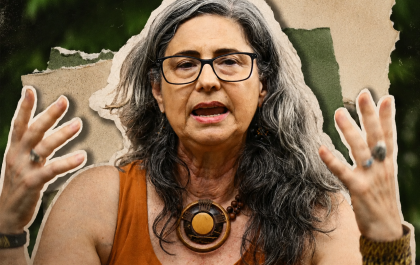
Luciana Gatti entra en política porque el Congreso brasileño está legislando la catástrofe
Luciana Gatti lleva más de 30 años estudiando la Amazonia y los gases que aceleran el calentamiento global. Es investigadora principal del Instituto Nacional de Investigaciones Espaciales de Brasil, el INPE, y coordina su Laboratorio de Gases de Efecto Invernadero. No es una tertuliana reciclada, una celebridad buscando foco ni una profesional de la política fabricada en un despacho. Es una científica que ha dedicado décadas a medir cómo uno de los mayores reguladores climáticos del planeta está dejando de funcionar.
Ahora ha decidido presentarse al Congreso.
Gatti anunció el 13 de julio su precandidatura a diputada federal por São Paulo dentro del Partido Socialismo y Libertad, el PSOL. Las candidaturas deberán registrarse oficialmente antes del 15 de agosto y la primera vuelta de las elecciones brasileñas se celebrará el 4 de octubre. Su objetivo es llevar la ciencia al lugar donde se aprueban las leyes que están acelerando el desastre. Porque publicar investigaciones sirve de poco cuando quienes legislan las ignoran, las niegan o directamente trabajan para las empresas responsables.
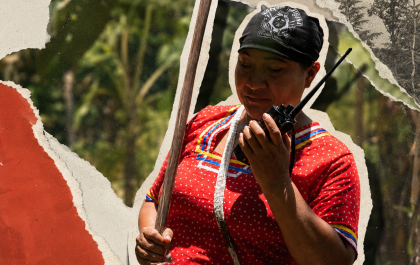
Ecuador abandona la Amazonia al oro ilegal y deja solos a quienes la protegen
La Amazonia ecuatoriana está siendo devorada por la minería ilegal mientras el Estado llega tarde, responde a medias o directamente mira hacia otro lado. Retroexcavadoras, dragas, campamentos clandestinos y grupos armados avanzan sobre territorios indígenas y áreas protegidas. Frente a ellos, 598 guardaparques abandonados a su suerte, sin capacidad legal para incautar maquinaria y sin medios para enfrentarse a organizaciones que llevan fusiles.
En el Parque Nacional Sumaco Napo-Galeras, varios trabajadores fueron interceptados durante una inspección por hombres fuertemente armados que afirmaron proporcionar seguridad a los mineros. Les quitaron los teléfonos, el GPS y la cámara. Quienes debían representar la autoridad ambiental terminaron desarmados, retenidos y obligados a explicar qué hacían dentro del espacio que estaban protegiendo. Los delincuentes pedían cuentas a los guardaparques y no al revés.
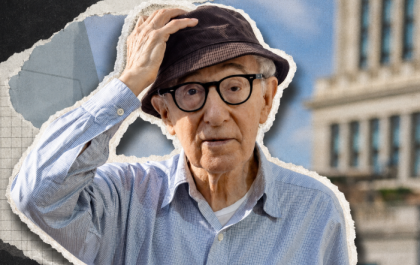
Ayuso convierte la cultura madrileña en un photocall pagado con dinero público
La política cultural de Isabel Díaz Ayuso tiene una regla bastante sencilla: para las creadoras y creadores corrientes existen formularios, convocatorias, límites presupuestarios y meses de espera; para las celebridades dispuestas a promocionar Madrid y posar junto al poder aparecen patrocinios millonarios, espacios públicos y contratos diseñados específicamente para ellas.
No es mecenazgo. Tampoco es una defensa desinteresada de la cultura. Es dinero público utilizado para comprar prestigio, propaganda turística y fotografías institucionales. La obra artística queda reducida a soporte publicitario y las administraciones se comportan como una agencia de representación financiada por las y los contribuyentes.
Nacho Cano fue durante años el mejor ejemplo de este modelo. Ahora Woody Allen recoge el testigo con un proyecto que recibirá 3 millones de euros de la Comunidad y del Ayuntamiento de Madrid. Dos nombres famosos, dos operaciones presentadas como apoyo cultural y una misma lógica: socializar el coste para que el beneficio político y empresarial quede en pocas manos.

15.000 personas ya han visto cómo la fe se convierte en poder
El último ReportajeSR analiza cómo determinados sectores del evangelismo conservador dejaron de limitarse a los templos para convertirse en una maquinaria política al servicio de la extrema derecha. De Trump a Bolsonaro, de Milei a Vox: redes comunitarias, guerras culturales, dinero, medios y religión convertidos en infraestructura electoral.
Presentado por Léa Gugelmann, el reportaje ya ha superado las 15.000 visualizaciones desde su estreno. Porque para entender el auge de la extrema derecha no basta con mirar a sus candidatos: también hay que observar quién construye sus discursos, moviliza sus bases y presenta el autoritarismo como una misión divina.

Vídeo | Sadismo en primera persona
Un turista graba el encierro de San Fermín como si estuviera en una atracción. Adrenalina, golpes, risas y animales convertidos en decorado para conseguir un vídeo viral. No está viviendo una tradición: está consumiendo sufrimiento como entretenimiento.
Además, corre con una cámara cuando está prohibido hacerlo, poniendo en peligro a quienes tiene alrededor. La turistificación añade otra capa de irresponsabilidad a una barbaridad ya normalizada: venir, beber, molestar, jugar con la vida ajena y marcharse con unos cuantos clics. El sadismo también se graba en primera persona.