


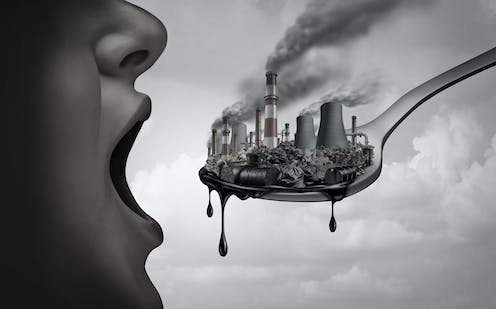

Pollutants are, by definition, harmful. But not all of them are equally harmful. Of the multitude of synthetic chemical compounds that pollute our environment, those that set off the loudest alarm bells are persistent organic pollutants (POPs).
These are toxic compounds present in the environment, in water and in food. As their name suggests, their resistance to degradation makes them remain in the environment for a long time. To make matters worse, we are talking about easily diffusible compounds that accumulate in the adipose tissue of living beings and which are capable of damaging our health and the wider ecosystem. In short, they tick all the boxes in terms of causing us major problems.
To the list of problems we must add that, due to their free circulation around the globe through the atmosphere, POPs do not remain stagnant where they have been dumped. Quite the contrary: they are present all over the planet.
PCBs have a molecular structure based on carbon and chlorine. This carbon-chlorine bond is difficult to break. Therefore, PCBs have a high permanence in the environment and are resistant to degradation.
Furthermore, they are semi-volatile despite their low vapour pressure because they have the ability to repel water from their surface. That is, PCBs with less chlorine in their structure are more volatile and more persistent, and can be transported over long distances. Moreover, by repelling water, they can bind to the lipids of living organisms and accumulate in their tissues.
The also have a great capacity for biomagnification – meaning they can accumulate to reach high levels of concentration the higher up the food chain they travel. That is why it is not uncommon for POPs to end up on our plates.
Dioxins and PCBs
There are many different types of POP. At the University of Navarre, we have focused on studying polychlorinated biphenyls (PCBs) and dioxins (both omnipresent in the food chain) and particularly their presence in meat and dairy products, as well as fish and shellfish. Since certain PCBs and dioxins have similar mechanisms, it’s common that they are studied together in the context of public health.
PCBs are toxic chlorinated aromatic compounds whose formula was first described by Schmidt and Schultz in 1881. They are hydrophobic compounds, which gives them the ability to react with the lipids of living organisms and, therefore, to accumulate in their tissues.
PCBs were used as industrial fluids, including dielectric coolants in capacitors and transformers, until they were banned in most countries in the 1980s.
On another note, the name “dioxins” normally groups together compounds belonging to two very different chemical structures: polychlorinated dibenzo-p-dioxins (PCDDs) and polychlorinated dibenzofurans (PCDFs).
Cardiovascular disease and cellular ageing
More than 90% of human exposure to dioxins occurs through food, particularly meat and dairy products, as well as fish and shellfish. It is common to find PCBs in milk and its derivatives, but also in animal organs such as the brain and liver.
Dietary exposure to persistent organic pollutants has been associated with cardiovascular risk factors in humans. Within the group of people analysed in the University of Navarre SUN Project (“Seguimiento Universidad de Navarra” – “University of Navarre Monitoring”), several studies showed that PCB levels obtained from dietary intake were associated with a higher risk of developing hypertension and obesity.
Likewise, other studies showed an association between dietary exposure to PCBs and coronary atherosclerosis, heart failure, obesity, type 2 diabetes, and mortality from cardiovascular diseases, among others.
Recently, researchers from the University of Navarre and the Physiopathology of Obesity and Nutrition Networking Biomedical Research Centre (CIBEROBN) have verified that high exposure to persistent organic pollutants (PCBs) through diet could also accelerate cellular ageing.
The research, based on 886 volunteers over the age of 55, was published in the journal Nutrients and has shown that these pollutants lead to telomere shortening. These non-coding DNA regions are found at the ends of the chromosomes and their length, in addition to reflecting life expectancy, indicates overall state of health. They also indicate the risk of chronic diseases.
Although more longitudinal studies are currently needed to corroborate this finding, the research highlights the influence of lifestyle and, specifically, diet on the integrity of genetic material or DNA.
The authors do not work for, consult, own shares in or receive funding from any company or organisation that would benefit from this article, and have disclosed no relevant affiliations beyond their academic appointment.



 Seguir
 Seguir
 Seguir
 Seguir
 Subscribe
 Seguir
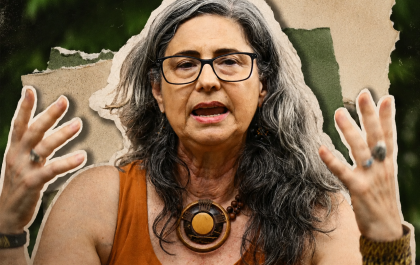
Luciana Gatti entra en política porque el Congreso brasileño está legislando la catástrofe
Luciana Gatti lleva más de 30 años estudiando la Amazonia y los gases que aceleran el calentamiento global. Es investigadora principal del Instituto Nacional de Investigaciones Espaciales de Brasil, el INPE, y coordina su Laboratorio de Gases de Efecto Invernadero. No es una tertuliana reciclada, una celebridad buscando foco ni una profesional de la política fabricada en un despacho. Es una científica que ha dedicado décadas a medir cómo uno de los mayores reguladores climáticos del planeta está dejando de funcionar.
Ahora ha decidido presentarse al Congreso.
Gatti anunció el 13 de julio su precandidatura a diputada federal por São Paulo dentro del Partido Socialismo y Libertad, el PSOL. Las candidaturas deberán registrarse oficialmente antes del 15 de agosto y la primera vuelta de las elecciones brasileñas se celebrará el 4 de octubre. Su objetivo es llevar la ciencia al lugar donde se aprueban las leyes que están acelerando el desastre. Porque publicar investigaciones sirve de poco cuando quienes legislan las ignoran, las niegan o directamente trabajan para las empresas responsables.

Ecuador abandona la Amazonia al oro ilegal y deja solos a quienes la protegen
La Amazonia ecuatoriana está siendo devorada por la minería ilegal mientras el Estado llega tarde, responde a medias o directamente mira hacia otro lado. Retroexcavadoras, dragas, campamentos clandestinos y grupos armados avanzan sobre territorios indígenas y áreas protegidas. Frente a ellos, 598 guardaparques abandonados a su suerte, sin capacidad legal para incautar maquinaria y sin medios para enfrentarse a organizaciones que llevan fusiles.
En el Parque Nacional Sumaco Napo-Galeras, varios trabajadores fueron interceptados durante una inspección por hombres fuertemente armados que afirmaron proporcionar seguridad a los mineros. Les quitaron los teléfonos, el GPS y la cámara. Quienes debían representar la autoridad ambiental terminaron desarmados, retenidos y obligados a explicar qué hacían dentro del espacio que estaban protegiendo. Los delincuentes pedían cuentas a los guardaparques y no al revés.

Ayuso convierte la cultura madrileña en un photocall pagado con dinero público
La política cultural de Isabel Díaz Ayuso tiene una regla bastante sencilla: para las creadoras y creadores corrientes existen formularios, convocatorias, límites presupuestarios y meses de espera; para las celebridades dispuestas a promocionar Madrid y posar junto al poder aparecen patrocinios millonarios, espacios públicos y contratos diseñados específicamente para ellas.
No es mecenazgo. Tampoco es una defensa desinteresada de la cultura. Es dinero público utilizado para comprar prestigio, propaganda turística y fotografías institucionales. La obra artística queda reducida a soporte publicitario y las administraciones se comportan como una agencia de representación financiada por las y los contribuyentes.
Nacho Cano fue durante años el mejor ejemplo de este modelo. Ahora Woody Allen recoge el testigo con un proyecto que recibirá 3 millones de euros de la Comunidad y del Ayuntamiento de Madrid. Dos nombres famosos, dos operaciones presentadas como apoyo cultural y una misma lógica: socializar el coste para que el beneficio político y empresarial quede en pocas manos.

THUNDERFORGE – El PENTÁGONO se echa en manos de la INTELIGENCIA ARTÍFICIAL #ReportajeS
El Pentágono ha dado un paso sin precedentes: poner la toma de decisiones y la estrategia militar en manos de la inteligencia artificial. Patricia Salvador te cuenta en este #ReportajeSR cómo, a…

STARSHIELD: la GUERRA PRIVADA (con dinero público) de MUSK #ReportajeSR
¿Es Elon Musk más poderoso que un Estado? Analizamos cómo SpaceX ha dejado de ser una empresa de cohetes para convertirse en el «sistema nervioso» de la guerra moderna. Desde el uso…
MODO REVOLUCIÓN
Activa el Modo Revolución con nosotras. Historias, investigaciones, vídeos y claves para entender qué está pasando y qué hay detrás.
También te puede interesar
Un toro de 300 metros: obscenidad franquista en versión parque temático
28 julio 2025PSOE: manual de cierre de filas en cinco pasos (y por qué siempre falla)
13 junio 2025Mazón no quiere dimitir: utiliza una remodelación para eludir responsabilidades
14 noviembre 2024La caída de un imperio: Elon Musk y todos sus frentes abiertos anuncian el final de un magnate
19 agosto 2024