



Este medio se sostiene gracias a su comunidad. APOYA EL PERIODISMO INDEPENDIENTE .
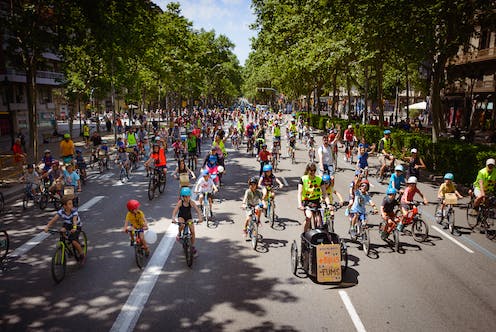
An image of KidicalMass in Barcelona, in May 2022. Calvox Periche/Kidical Mass
Urban development and social norms concerning childhood have led European cities to a situation where streets are no longer places for children and young people. Gill Valentine has explained that this shift has been fuelled by our division of children into two categories – ‘angels’ and ‘demons’.
She described how on one hand children are considered too small, vulnerable and innocent to roam and play in urban spaces because of traffic, ‘stranger-danger’ and other hazards. On the other hand, teenagers are constructed as a public threat and should not be allowed to hang out on the streets with their bikes, skateboards and presumably bad intentions.
Subsequent studies have continued to explain how these kinds of representations have caused children’s exclusion and ‘othering’ from public spaces in the complex web of urban governance, public life and parenting. Children’s autonomous movement and play in cities has steadily declined in recent decades. In turn, children and young people are increasingly sequestered in homes, cars or institutional spaces for adult-controlled education and play.
Many experts and interest groups have voiced their concerns about this and explained why closing the streets to children is bad policy. Children’s physical activity levels are alarmingly low and limiting their sense of safety and autonomy also hampers their mental and social wellbeing. These trends are endangering the health of an entire generation and compromising their ability to uphold societies and economies with grim dependency ratios.
At the same time, as often noted by childhood scholars, children should not be reduced to mere ‘future investments’ or ‘adults of tomorrow’. They are also people with present-day rights to citizenship, participation and autonomy in their living environments.
Old and new movements for the child-friendly city
However, there are many examples of how people have resisted children’s exclusion from the streets in modern history. One of the most notable ones was the Stop de Kindermoord (‘Stop child murder’) movement in the Netherlands in early 1970s. This aimed to curb child traffic fatalities, which, at the time, had peaked to the highest in Europe.
The movement organised demonstrations, pressured decision makers to pass legal and planning measures and created safe spaces through direct action and tactical urbanism. With success. Child safety rose up the agenda, and the campaigners continued to play an important role in traffic policies for over a decade. However, over time they were marginalised and traffic danger was largely re-established as a ‘natural’ part of urban childhood.
Half a century after the Stop de Kindermoord movement, we are witnessing another wave of civic activity sweeping across the globe but especially in Europe. Old and new strategies are deployed, but the message is similar: the campaigners want systemic change, not awareness campaigns on road safety.
Promoting safety vests, helmets and children’s traffic awareness are not strategies to curb traffic violence but to maintain it, as they offload the responsibility on individual children and parents. Instead the activists mobilise entire communities and use local demonstrations and experiments to provide people with concrete experiences of how cities could be different.
Taking action nowadays
Photograph of Kidical Mass.
Hannah Walther/Kidical Mass
Kidical Mass is a rapidly growing urban protest of parents, educators and children that organises colourful bicycle demonstrations in small and large cities. In 2022 it gathered over 90,000 children, young people and families over two campaign weekends in over 400 locations across Europe.
The organisers attest that Kidical Mass is a one-day-experiment that allows people to see city spaces in a different light and turn these experiences into political demand.
The movement’s political effect recently became very concrete in Germany, where the Transport Minister’s Conference supported a reform of the national road traffic law based on a petition handed in by Kidical Mass activists in 2022.
BiciBús (Bike Bus) is another growing movement. The goal is simple: to provide children with a guided group to cycle to school with a predefined route at a certain time. They usually run once a week, aiming to develop the habit of cycling for families and entire communities. Pedalling in groups is not only a way to safely arrive at school, but also fun, and a way to demonstrate for child-friendly cities.
The idea is not new, but in the last couple of years the number of children’s pedalling buses has grown rapidly, especially in Europe, thanks to social media.
BiciBús in Barcelona.
Calvox Periche/CityLab Barcelona
School streets and play streets are also an important implication the new civic activity. Local advocacy groups (see for example Playing Out in the UK) are mobilising schools and local communities to create these open, inclusive, and safe urban spaces. Often the idea is to open certain stretches to children by limiting car traffic. In some places collaboration with decision makers and planners has led to concrete changes.
The campaigners attest that in the long term school streets and play streets should be connected to one another to create comprehensive, safe and inclusive mobility networks.
Ways forward?
In many respects the current civic movements for child-friendly cities are continuing the work of their predecessors. By claiming urban spaces, introducing citizen-led experiments and mobilising vast amounts of people, they create opportunities to see and think of alternative futures. What they want and what is only starting to emerge is the direct impact on more institutional processes, initiatives and frameworks.
Still, in a relatively short time they have left a mark. While physical infrastructures might take time to change, the way communities use them can change much faster. Mounting concerns on children’s wellbeing coupled with the need for an urgent sustainability transition of urban transport provide the movements with novel leverage.
Whether we will witness a major paradigm shift or not, it seems like in some respects the activists have already won. On their local pedalling buses, demonstrations and pop-up streets they are not only demanding a better tomorrow, but are already living it.
Kidical Mass is organising the next large scale Action Weekend in May 5-7, where European cities can expect an even larger number of demonstrations, BiciBúses and street experiments than before. The interactive map outlining these actions can be accessed at kidsonbike.org.
Kidical Mass/Twitter
Jonne Silonsaari receives funding from Strategic Research Council at Academy of Finland.
Gemma Simón i Mas es miembro de ConBici.
Jordi Honey-Rosés y Marco te Brömmelstroet no reciben salarios, ni ejercen labores de consultoría, ni poseen acciones, ni reciben financiación de ninguna compañía u organización que pueda obtener beneficio de este artículo, y han declarado carecer de vínculos relevantes más allá del puesto académico citado.
Este periodismo no lo financian bancos ni partidos
Lo sostienen personas como tú. En un contexto de ruido, propaganda y desinformación, hacer periodismo crítico, independiente y sin miedo tiene un coste.
Si este artículo te ha servido, te ha informado o te ha hecho pensar, puedes ayudarnos a seguir publicando.
Cada aportación cuenta. Sin intermediarios. Sin líneas rojas impuestas. Solo periodismo sostenido por su comunidad.
 Seguir
 Seguir
 Seguir
 Seguir
 Subscribe
 Seguir
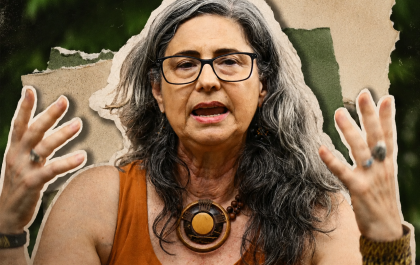
Luciana Gatti entra en política porque el Congreso brasileño está legislando la catástrofe
Luciana Gatti lleva más de 30 años estudiando la Amazonia y los gases que aceleran el calentamiento global. Es investigadora principal del Instituto Nacional de Investigaciones Espaciales de Brasil, el INPE, y coordina su Laboratorio de Gases de Efecto Invernadero. No es una tertuliana reciclada, una celebridad buscando foco ni una profesional de la política fabricada en un despacho. Es una científica que ha dedicado décadas a medir cómo uno de los mayores reguladores climáticos del planeta está dejando de funcionar.
Ahora ha decidido presentarse al Congreso.
Gatti anunció el 13 de julio su precandidatura a diputada federal por São Paulo dentro del Partido Socialismo y Libertad, el PSOL. Las candidaturas deberán registrarse oficialmente antes del 15 de agosto y la primera vuelta de las elecciones brasileñas se celebrará el 4 de octubre. Su objetivo es llevar la ciencia al lugar donde se aprueban las leyes que están acelerando el desastre. Porque publicar investigaciones sirve de poco cuando quienes legislan las ignoran, las niegan o directamente trabajan para las empresas responsables.
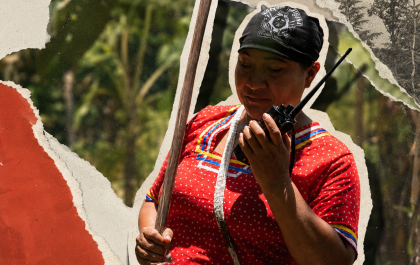
Ecuador abandona la Amazonia al oro ilegal y deja solos a quienes la protegen
La Amazonia ecuatoriana está siendo devorada por la minería ilegal mientras el Estado llega tarde, responde a medias o directamente mira hacia otro lado. Retroexcavadoras, dragas, campamentos clandestinos y grupos armados avanzan sobre territorios indígenas y áreas protegidas. Frente a ellos, 598 guardaparques abandonados a su suerte, sin capacidad legal para incautar maquinaria y sin medios para enfrentarse a organizaciones que llevan fusiles.
En el Parque Nacional Sumaco Napo-Galeras, varios trabajadores fueron interceptados durante una inspección por hombres fuertemente armados que afirmaron proporcionar seguridad a los mineros. Les quitaron los teléfonos, el GPS y la cámara. Quienes debían representar la autoridad ambiental terminaron desarmados, retenidos y obligados a explicar qué hacían dentro del espacio que estaban protegiendo. Los delincuentes pedían cuentas a los guardaparques y no al revés.

Ayuso convierte la cultura madrileña en un photocall pagado con dinero público
La política cultural de Isabel Díaz Ayuso tiene una regla bastante sencilla: para las creadoras y creadores corrientes existen formularios, convocatorias, límites presupuestarios y meses de espera; para las celebridades dispuestas a promocionar Madrid y posar junto al poder aparecen patrocinios millonarios, espacios públicos y contratos diseñados específicamente para ellas.
No es mecenazgo. Tampoco es una defensa desinteresada de la cultura. Es dinero público utilizado para comprar prestigio, propaganda turística y fotografías institucionales. La obra artística queda reducida a soporte publicitario y las administraciones se comportan como una agencia de representación financiada por las y los contribuyentes.
Nacho Cano fue durante años el mejor ejemplo de este modelo. Ahora Woody Allen recoge el testigo con un proyecto que recibirá 3 millones de euros de la Comunidad y del Ayuntamiento de Madrid. Dos nombres famosos, dos operaciones presentadas como apoyo cultural y una misma lógica: socializar el coste para que el beneficio político y empresarial quede en pocas manos.
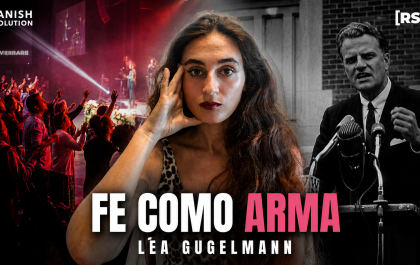
15.000 personas ya han visto cómo la fe se convierte en poder
El último ReportajeSR analiza cómo determinados sectores del evangelismo conservador dejaron de limitarse a los templos para convertirse en una maquinaria política al servicio de la extrema derecha. De Trump a Bolsonaro, de Milei a Vox: redes comunitarias, guerras culturales, dinero, medios y religión convertidos en infraestructura electoral.
Presentado por Léa Gugelmann, el reportaje ya ha superado las 15.000 visualizaciones desde su estreno. Porque para entender el auge de la extrema derecha no basta con mirar a sus candidatos: también hay que observar quién construye sus discursos, moviliza sus bases y presenta el autoritarismo como una misión divina.

Vídeo | Sadismo en primera persona
Un turista graba el encierro de San Fermín como si estuviera en una atracción. Adrenalina, golpes, risas y animales convertidos en decorado para conseguir un vídeo viral. No está viviendo una tradición: está consumiendo sufrimiento como entretenimiento.
Además, corre con una cámara cuando está prohibido hacerlo, poniendo en peligro a quienes tiene alrededor. La turistificación añade otra capa de irresponsabilidad a una barbaridad ya normalizada: venir, beber, molestar, jugar con la vida ajena y marcharse con unos cuantos clics. El sadismo también se graba en primera persona.