



Este medio se sostiene gracias a su comunidad. APOYA EL PERIODISMO INDEPENDIENTE .
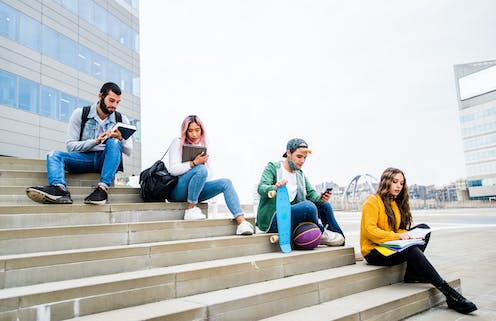
Different people from different countries studying in foreign universities, that’s Erasmus+. Shutterstock / DavideAngelini
In 1987, 3,200 students from different European countries embarked upon a pioneering programme which, based on the idea of promoting mobility, intercultural competence, and the European dimension, is still considered the flagship of cooperation in education in the EU even to this day.
Three decades later, approximately 300,000 students benefited from the 2017 Erasmus Programme. The overall programme has enjoyed more than twelve million participants in 36 years of life.
The signing of the Maastricht Treaty in 1992, with which the European Union was officially created, came to support the idea of the free movement of students and researchers in the European sphere. Later, the EU’s 2020 Development Strategy once again gave a nod to the importance of investing in human capital to boost economic development and internationalisation. Mobility was one of the keys for the European Higher Education Area (EHEA) in 2025.
In 2017, the Erasmus Programme (currently Erasmus+) celebrated its 30th anniversary. This programme is, without a doubt, a renowned and successful EU initiative which has granted scholarships to foster the mobility of students and staff, to develop intercultural competence, and to promote the European dimension.
The idea behind the Erasmus Programme was visionary: “to promote joint study courses between universities and higher education institutions”. There is no doubt that the Erasmus Programme has incentivised university students to travel far and wide across the continent and contributed to the EHEA’s current international orientation.
Spain: a leader in the Erasmus+ Programme
Over time, Spain has established itself as the programme’s main country of origin and destination in terms of number of participants. The growth of international study mobility in Spain was especially evident between 2001 and 2011, a period in which the number of students coming and going doubled, reaching a total of 36,842 outgoing students and 42,537 incoming students in 2014–2015.
In the 2013–2014 academic year alone, the Erasmus program invested more than €580 million to enable 272,000 students to study abroad. Also included in that budget are the wages of 57,000 teachers and administrative staff members.
For the 2014–2020 period, the European Commission increased its budget allocation for the Erasmus+ Programme by 40%, reaching a total of €14.7 billion. Because of the figures involved, knowing the programme’s real impact on the student body has become a topic of growing interest.
Types of mobility
Various types of student mobility are defined in the literature. Vertical mobility is “inward mobility from other parts of the world, from a lower educational level to a more advanced educational level” and horizontal mobility would be intra-European mobility between programmes of equal educational value. In the EHEA, horizontal mobility has prevailed since the Bologna Process established uniform study programmes in which students can learn on equal terms.
Depending on the length of time spent abroad, there are two types of mobility: degree mobility and credit mobility. Degree mobility is a “long-term mobility of students for the purpose of completing a full course of study and acquiring a degree abroad”, including participation in a joint degree programme.
Credit mobility is “temporary enrolment abroad with the aim of continuing studies, but finishing them in the country of origin”.
Another distinction is the direction of mobility: incoming mobility is “the country to which the student is moving” while outgoing mobility is “the country from which the student moves”.
In the most recent Erasmus+ Programme Guide, the term “learning mobility” covers mobility for a variety of players (students, staff, associations, volunteers, young workers, and young people) for the purpose of learning.
The guide specifies that “while long-term physical mobility is strongly recommended”, there should be more flexible durations to ensure that the program is accessible to all students, regardless of their backgrounds, circumstances, and fields of study.
Impact of international mobility
Despite the enormous spread of the Erasmus Programme, there are few empirical studies on students’ ability to identify and experience cultural differences. It would be especially interesting to research individual variables, such as the cultural background of students and their different contexts, as well as the different characteristics of the study program abroad.
Furthermore, few if any studies address students’ abilities to learn, internalise, and call upon intercultural competencies in their lives.
Most study abroad programmes seek to achieve multiple goals, including academic skills (for example, language skills), professional development (for example, a sense of responsibility), personal development (for example, flexibility), and intercultural competence (for example, decreased ethnocentrism).
Is international mobility always positive?
Universities, governments, employers, and students themselves tend to automatically assume that international mobility has a positive impact.
However, exposure to cultural differences during study abroad does not automatically increase intercultural understanding, unless students’ reflective processes are explicitly encouraged by institutions before departure and prior to return from the mobility experience.
Development of students’ intercultural competence may depend, in particular, on their initial levels, on gender (women benefit more), on their integration in international mobility programmes, and on the opportunities they have to maintain intercultural relations.
Intercultural competence
The realities of today’s world require universities to focus their efforts on the citizens of the coming decades. They must have the skills to face new challenges: the movement of people between countries, political restructuring, and the socioeconomic order all call for transformations that will require the participation of responsible citizens who are sensitive to cultural differences and knowledgeable about the international sphere.
Considering that participants in mobility programmes present characteristics that are different from their peers in terms of ability, field of study, and socioeconomic background and given that we cannot say with certainty whether the correlations observed to date are in fact causality, it is necessary to continue promoting research linked to international mobility in order to close existing gaps in knowledge.
Rosa M. Rodríguez-Izquierdo ne travaille pas, ne conseille pas, ne possède pas de parts, ne reçoit pas de fonds d’une organisation qui pourrait tirer profit de cet article, et n’a déclaré aucune autre affiliation que son organisme de recherche.
Este periodismo no lo financian bancos ni partidos
Lo sostienen personas como tú. En un contexto de ruido, propaganda y desinformación, hacer periodismo crítico, independiente y sin miedo tiene un coste.
Si este artículo te ha servido, te ha informado o te ha hecho pensar, puedes ayudarnos a seguir publicando.
Cada aportación cuenta. Sin intermediarios. Sin líneas rojas impuestas. Solo periodismo sostenido por su comunidad.
 Seguir
 Seguir
 Seguir
 Seguir
 Subscribe
 Seguir
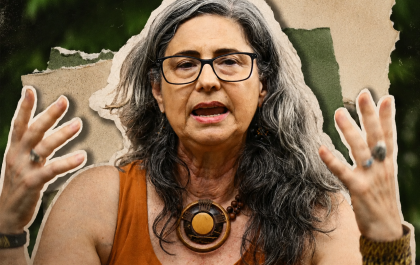
Luciana Gatti entra en política porque el Congreso brasileño está legislando la catástrofe
Luciana Gatti lleva más de 30 años estudiando la Amazonia y los gases que aceleran el calentamiento global. Es investigadora principal del Instituto Nacional de Investigaciones Espaciales de Brasil, el INPE, y coordina su Laboratorio de Gases de Efecto Invernadero. No es una tertuliana reciclada, una celebridad buscando foco ni una profesional de la política fabricada en un despacho. Es una científica que ha dedicado décadas a medir cómo uno de los mayores reguladores climáticos del planeta está dejando de funcionar.
Ahora ha decidido presentarse al Congreso.
Gatti anunció el 13 de julio su precandidatura a diputada federal por São Paulo dentro del Partido Socialismo y Libertad, el PSOL. Las candidaturas deberán registrarse oficialmente antes del 15 de agosto y la primera vuelta de las elecciones brasileñas se celebrará el 4 de octubre. Su objetivo es llevar la ciencia al lugar donde se aprueban las leyes que están acelerando el desastre. Porque publicar investigaciones sirve de poco cuando quienes legislan las ignoran, las niegan o directamente trabajan para las empresas responsables.
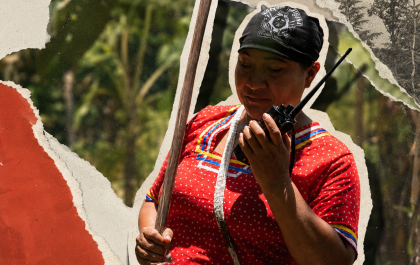
Ecuador abandona la Amazonia al oro ilegal y deja solos a quienes la protegen
La Amazonia ecuatoriana está siendo devorada por la minería ilegal mientras el Estado llega tarde, responde a medias o directamente mira hacia otro lado. Retroexcavadoras, dragas, campamentos clandestinos y grupos armados avanzan sobre territorios indígenas y áreas protegidas. Frente a ellos, 598 guardaparques abandonados a su suerte, sin capacidad legal para incautar maquinaria y sin medios para enfrentarse a organizaciones que llevan fusiles.
En el Parque Nacional Sumaco Napo-Galeras, varios trabajadores fueron interceptados durante una inspección por hombres fuertemente armados que afirmaron proporcionar seguridad a los mineros. Les quitaron los teléfonos, el GPS y la cámara. Quienes debían representar la autoridad ambiental terminaron desarmados, retenidos y obligados a explicar qué hacían dentro del espacio que estaban protegiendo. Los delincuentes pedían cuentas a los guardaparques y no al revés.

Ayuso convierte la cultura madrileña en un photocall pagado con dinero público
La política cultural de Isabel Díaz Ayuso tiene una regla bastante sencilla: para las creadoras y creadores corrientes existen formularios, convocatorias, límites presupuestarios y meses de espera; para las celebridades dispuestas a promocionar Madrid y posar junto al poder aparecen patrocinios millonarios, espacios públicos y contratos diseñados específicamente para ellas.
No es mecenazgo. Tampoco es una defensa desinteresada de la cultura. Es dinero público utilizado para comprar prestigio, propaganda turística y fotografías institucionales. La obra artística queda reducida a soporte publicitario y las administraciones se comportan como una agencia de representación financiada por las y los contribuyentes.
Nacho Cano fue durante años el mejor ejemplo de este modelo. Ahora Woody Allen recoge el testigo con un proyecto que recibirá 3 millones de euros de la Comunidad y del Ayuntamiento de Madrid. Dos nombres famosos, dos operaciones presentadas como apoyo cultural y una misma lógica: socializar el coste para que el beneficio político y empresarial quede en pocas manos.

15.000 personas ya han visto cómo la fe se convierte en poder
El último ReportajeSR analiza cómo determinados sectores del evangelismo conservador dejaron de limitarse a los templos para convertirse en una maquinaria política al servicio de la extrema derecha. De Trump a Bolsonaro, de Milei a Vox: redes comunitarias, guerras culturales, dinero, medios y religión convertidos en infraestructura electoral.
Presentado por Léa Gugelmann, el reportaje ya ha superado las 15.000 visualizaciones desde su estreno. Porque para entender el auge de la extrema derecha no basta con mirar a sus candidatos: también hay que observar quién construye sus discursos, moviliza sus bases y presenta el autoritarismo como una misión divina.

Vídeo | Sadismo en primera persona
Un turista graba el encierro de San Fermín como si estuviera en una atracción. Adrenalina, golpes, risas y animales convertidos en decorado para conseguir un vídeo viral. No está viviendo una tradición: está consumiendo sufrimiento como entretenimiento.
Además, corre con una cámara cuando está prohibido hacerlo, poniendo en peligro a quienes tiene alrededor. La turistificación añade otra capa de irresponsabilidad a una barbaridad ya normalizada: venir, beber, molestar, jugar con la vida ajena y marcharse con unos cuantos clics. El sadismo también se graba en primera persona.