



Este medio se sostiene gracias a su comunidad. APOYA EL PERIODISMO INDEPENDIENTE .
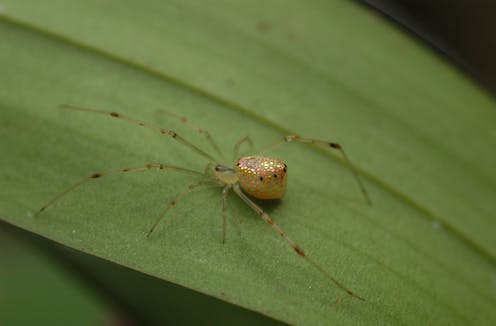
Specimen of the spider Thwaitesia nigronodosa. Wikimedia Commons, CC BY-SA
A school in Gloucestershire, in the west of England, was closed for several days due to an “invasion of poisonous spiders”. Experts claimed they were not aggressive, but the school was closed, alarm spread and some media outlets were quick to call them “eight-legged monsters”.
In another case, the alleged severity of a spider bite on a woman triggered alarm in Mallorca (Spain). Social networks were flooded with messages and photographs of bites. Although the Conselleria de Salut and the leading hospital on the islands made it public that there was no health alarm and experts explained that no dangerous spiders are present in Mallorca, messages continued for days and days on social media.
Such news is likely to produce fear, a visceral reaction often sought by the most sensationalist tabloids. These stories do not remain in the local or regional press, but are disseminated on a global scale almost immediately.
The news carries with it political or social actions that can be costly, often unnecessarily so. For example, not taking children to school for several days or environmental pollution from unnecessary pesticide treatments. They also fuel a global sentiment based on misinformation: spider panic.
Contrary to the impression we get from reading these news stories, the risk of being exposed to a spider is minimal. Studies in Switzerland estimate that the annual probability of being bitten by a spider is between 10 and 100 cases per million inhabitants. Another study in Australia found that only 6% of confirmed spider bites were of medical importance.
The global spread of misinformation about spiders
A recent study by more than 60 researchers, published in the journal Current Biology, has examined the global spread of misinformation about spiders. This collective effort has resulted in the compilation of more than 5,000 news items on spider-human encounters published on the internet between 2010 and 2020.
The news items were evaluated in terms of their quality (presence or absence of errors) and their level of sensationalism.
Reporting errors and sensationalist language
Almost half of the news items analysed contained errors or inaccurate information, such as incorrect identification of the spider involved. Some articles report species that do not even live in the area, and sometimes there is no certainty that the bite occurred.
In up to 43% of cases, the news stories used sensationalist language. Although the language used in the news was less sensational when experts in arachnology had been consulted.
Errors often started at the regional level, and the story was amplified in national and international media. According to experts, this is a defining characteristic of modern misinformation: the amplification of small errors that support a false narrative. It is as present in spider news as it is in political news.
The likelihood of a country being a distributor of sensational news stories about human-spider encounters was positively related to several factors. These included the proportion of sensational news stories published in the country, the presence of spiders considered deadly, and a high number of internet users.
There are more dangerous spiders in Australia than in almost any other country, yet news about spiders is accurate and rarely emotionally charged. According to the analysis, the UK generates the most misinformation about arachnids, despite having very few dangerous venomous spider species.
The implications of the misinformation generated are no less significant. They reinforce a feeling of public animosity towards these arthropods. This leads to what we mentioned at the beginning of the article: the avoidance of their presence in public or private spaces, and the use of unnecessary pesticide treatments. Moreover, false alarms may lead to school closures or tourism suffering.
Shutterstock / MR.AUKID PHUMSIRICHAT
The other side of spiders
The first clear spider-like representations date back to 10,000 years ago. Because of their distribution, occupying all continents and habitats, as well as their biology and ecology, they have been admired and feared in equal measure.
They have often been associated with divinities, with creative powers (due to their great fertility, ability to make and weave silk and their cunning) and destructive powers (related to their hunting ways and the presence of poison).
All spiders, with the exception of the Uloboridae family, produce venom, but this, with rare exceptions, is imperceptible to humans. They use it, along with silk, to trap or immobilise their prey.
Only four genera of spiders have been described whose venom is of medical interest (Phoneutria, Loxosceles, Latrodectus and Atrax), and only 4% of the known species may be dangerous to humans. This means that of the approximately 45,000 known species, more than 43,200 are harmless.
Contrary to popular belief, spiders have many beneficial aspects. Firstly, they contribute to the total biodiversity of the planet, being one of the largest groups of invertebrate animals. In addition, they play an essential role in crop pest remediation due to their status as insect predators and are an important component of bio-indicators of environmental quality.
Once the criminalised view of arachnids has been debunked, the best thing to do when faced with a spider is to be kind to it, because it is a natural treasure.
Saioa Legarrea Imizcoz carries out her research work at the University of La Rioja thanks to the European Union Next Generation EU funds articulated through the María Zambrano call (Royal Decree 289/2021 of 20 April).
Tania A. García de la Parra Bañares does not work for, consult, own shares in or receive funding from any company or organization that would benefit from this article, and has disclosed no relevant affiliations beyond their academic appointment.
Este periodismo no lo financian bancos ni partidos
Lo sostienen personas como tú. En un contexto de ruido, propaganda y desinformación, hacer periodismo crítico, independiente y sin miedo tiene un coste.
Si este artículo te ha servido, te ha informado o te ha hecho pensar, puedes ayudarnos a seguir publicando.
Cada aportación cuenta. Sin intermediarios. Sin líneas rojas impuestas. Solo periodismo sostenido por su comunidad.
 Seguir
 Seguir
 Seguir
 Seguir
 Subscribe
 Seguir
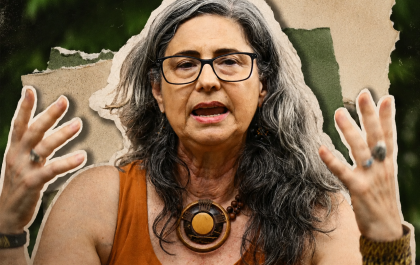
Luciana Gatti entra en política porque el Congreso brasileño está legislando la catástrofe
Luciana Gatti lleva más de 30 años estudiando la Amazonia y los gases que aceleran el calentamiento global. Es investigadora principal del Instituto Nacional de Investigaciones Espaciales de Brasil, el INPE, y coordina su Laboratorio de Gases de Efecto Invernadero. No es una tertuliana reciclada, una celebridad buscando foco ni una profesional de la política fabricada en un despacho. Es una científica que ha dedicado décadas a medir cómo uno de los mayores reguladores climáticos del planeta está dejando de funcionar.
Ahora ha decidido presentarse al Congreso.
Gatti anunció el 13 de julio su precandidatura a diputada federal por São Paulo dentro del Partido Socialismo y Libertad, el PSOL. Las candidaturas deberán registrarse oficialmente antes del 15 de agosto y la primera vuelta de las elecciones brasileñas se celebrará el 4 de octubre. Su objetivo es llevar la ciencia al lugar donde se aprueban las leyes que están acelerando el desastre. Porque publicar investigaciones sirve de poco cuando quienes legislan las ignoran, las niegan o directamente trabajan para las empresas responsables.
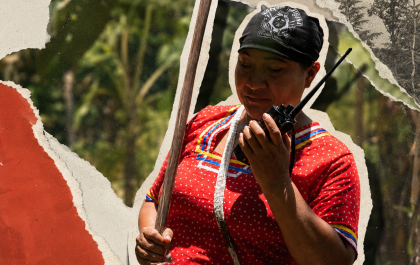
Ecuador abandona la Amazonia al oro ilegal y deja solos a quienes la protegen
La Amazonia ecuatoriana está siendo devorada por la minería ilegal mientras el Estado llega tarde, responde a medias o directamente mira hacia otro lado. Retroexcavadoras, dragas, campamentos clandestinos y grupos armados avanzan sobre territorios indígenas y áreas protegidas. Frente a ellos, 598 guardaparques abandonados a su suerte, sin capacidad legal para incautar maquinaria y sin medios para enfrentarse a organizaciones que llevan fusiles.
En el Parque Nacional Sumaco Napo-Galeras, varios trabajadores fueron interceptados durante una inspección por hombres fuertemente armados que afirmaron proporcionar seguridad a los mineros. Les quitaron los teléfonos, el GPS y la cámara. Quienes debían representar la autoridad ambiental terminaron desarmados, retenidos y obligados a explicar qué hacían dentro del espacio que estaban protegiendo. Los delincuentes pedían cuentas a los guardaparques y no al revés.

Ayuso convierte la cultura madrileña en un photocall pagado con dinero público
La política cultural de Isabel Díaz Ayuso tiene una regla bastante sencilla: para las creadoras y creadores corrientes existen formularios, convocatorias, límites presupuestarios y meses de espera; para las celebridades dispuestas a promocionar Madrid y posar junto al poder aparecen patrocinios millonarios, espacios públicos y contratos diseñados específicamente para ellas.
No es mecenazgo. Tampoco es una defensa desinteresada de la cultura. Es dinero público utilizado para comprar prestigio, propaganda turística y fotografías institucionales. La obra artística queda reducida a soporte publicitario y las administraciones se comportan como una agencia de representación financiada por las y los contribuyentes.
Nacho Cano fue durante años el mejor ejemplo de este modelo. Ahora Woody Allen recoge el testigo con un proyecto que recibirá 3 millones de euros de la Comunidad y del Ayuntamiento de Madrid. Dos nombres famosos, dos operaciones presentadas como apoyo cultural y una misma lógica: socializar el coste para que el beneficio político y empresarial quede en pocas manos.

15.000 personas ya han visto cómo la fe se convierte en poder
El último ReportajeSR analiza cómo determinados sectores del evangelismo conservador dejaron de limitarse a los templos para convertirse en una maquinaria política al servicio de la extrema derecha. De Trump a Bolsonaro, de Milei a Vox: redes comunitarias, guerras culturales, dinero, medios y religión convertidos en infraestructura electoral.
Presentado por Léa Gugelmann, el reportaje ya ha superado las 15.000 visualizaciones desde su estreno. Porque para entender el auge de la extrema derecha no basta con mirar a sus candidatos: también hay que observar quién construye sus discursos, moviliza sus bases y presenta el autoritarismo como una misión divina.

Vídeo | Sadismo en primera persona
Un turista graba el encierro de San Fermín como si estuviera en una atracción. Adrenalina, golpes, risas y animales convertidos en decorado para conseguir un vídeo viral. No está viviendo una tradición: está consumiendo sufrimiento como entretenimiento.
Además, corre con una cámara cuando está prohibido hacerlo, poniendo en peligro a quienes tiene alrededor. La turistificación añade otra capa de irresponsabilidad a una barbaridad ya normalizada: venir, beber, molestar, jugar con la vida ajena y marcharse con unos cuantos clics. El sadismo también se graba en primera persona.