



Este medio se sostiene gracias a su comunidad. APOYA EL PERIODISMO INDEPENDIENTE .
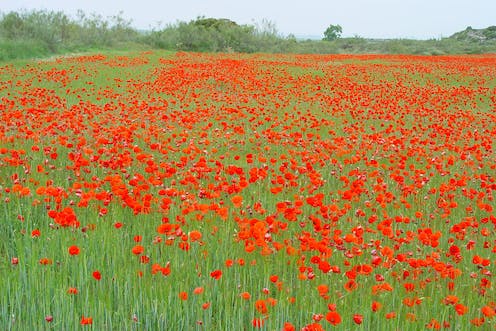
Poppies in a cereal field. Jordi Recasens Guinjuan, Author provided
Spring is here and many fields of crops are dotted with red poppies. Farmers know that this is not a good sign, even if hundreds of people show up, mobile phones in hand, in search of the best photograph.
Poppies, along with other species that grow in fields, can be a problem for crops if they appear in large numbers. We informally call them weeds, but what are they really and how bad are they?
Impersonators of cultivated plants
Weeds are generally annual or pluri-annual herbaceous plant species that are adapted to environments that are frequently disturbed, such as fields of crops. Their survival strategy is to resemble the crop as much as possible, to maximise their chances of survival and reproduction. To accomplish that, they germinate, flower, or mature at times similar to the crop, or they have a similar growth strategy.
There are species that are highly adapted to the winter grain cycle, such as the poppy (Papaver roheas) and annual ryegrass (Lolium rigidum). Others, such as lamb’s quarters (Chenopodium album) and redroot pigweed (Amaranthus retroflexus), are adapted to summer crops (for example, corn), which have rainwater or irrigation available.
Woody fields such as olive groves and vineyards also have their own species like wall-rocket (Diplotaxis spp.). In these cases, the plants are more adapted to management (harvesting, tilling) and not so much to the timing of the crop itself.
From the point of view of their adaptive strategy, weeds are plants that thrive in fertile environments that are regularly disturbed, a strategy defined as “type R”, for “ruderal”. Fields of crops are one of the primary places where these conditions occur. The high levels of fertility are provided by manure or fertilisers and the disturbances include working the soil, harvesting, chipping, and/or the application of herbicides.
A species of wall-rocket (Diplotaxis catholica).
Jordi Recasens, Author provided
Weeds: are they always bad?
Because they grow in the same places as crops, weeds compete for space, light, and resources such as water and nutrients. It is estimated that, worldwide, these plants can reduce harvests by up to 30%. They are the organisms that cause the most losses, even more than pests and crop diseases.
Apart from crop losses, weeds can reduce the quality of the harvested product (grain or forage contamination), transmit diseases to crops, and make agricultural tasks more difficult.
However, some species and their seeds also contribute to providing ecosystem services. For example, they contribute to biodiversity, host beneficial insects and pollinators, feed birds, and reduce erosion at certain times of the year.
So, then, what determines if a plant is a weed? Although this is a complex question, the answer lies in the plant’s density and time of growth, its competitiveness with the crop in question, and its seed production. The latter will determine the persistence of the problem in successive years.
It is true that some very competitive species (like cleavers, Galium aparine) can, in turn, promote ecosystem services by harbouring a vast array of beneficial insects. However, the more aggressive and dominant species are not usually the ones that are best at providing these positive effects.
Cleavers (Galium aparine).
Jordi Recasens, Author provided
Consequences of improper handling
For a plant to become a “weed”, it must thrive in fields of crops, and that is where the paradox comes in: many of the most competitive and aggressive weeds are often this way due to inappropriate management. For example, an excessive use of herbicides along with poor crop rotation has promoted, in several species, the selection of biotypes that are resistant to these chemical products. This has aggravated their impact on crops and it makes control options more difficult.
Likewise, an excessive use of fertilisers has favoured, in some cases, the development of very competitive species adapted to such scenarios. This is the result of the great degree of resilience of these plants; that is, their ability to adapt and perpetuate themselves when faced with the different changes that come about through their management.
In most cases where weeds cause major yield losses, one or just a few species that are functionally very similar to each other are the culprits. This means that these species have similar germination times or a similar growth strategy and resource assimilation. For example, in grain fields, we can look at annual ryegrass, wild oat (Avena sterilis), and the poppy. Likewise, in corn fields, noteworthy are lambs quarters, black nightshade (Solanum nigrum), and foxtail (Setaria spp.).
Wild oat (Avena sterilis) and poppies (Papaver roheas) in a grain field.
Jordi Recasens, Author provided
These species are the ones that manage to pass through all the “filters” put in place by the environment (temperature, rainfall/irrigation, etc.) and crop management (working the fields, herbicides, etc.). They are the most competitive species and displace others.
To try to control them, we sometimes fall into the trap of upping the pressure against them, using the same tools (more doses of herbicides, more work in general) and not leaving behind the very system that allowed for their presence in the first place (like monoculture). There are many good reasons why farmers act this way, but the truth is that sometimes this mentality only makes the problem worse.
Can we live with weeds?
To get out of this vicious circle, it is necessary to diversify – not just crops, but also soil-management tactics, weed-control tools, harvest times, and even mentalities.
Over the medium and long term, the diversification of agroecosystems also results in the diversification of weed communities. Some recent studies confirm that the greater the diversity of weeds, the less competitiveness the resulting community has with the crop. The more species coexist in one place, the lower the probability is of there being a dominant species.
It is worth asking ourselves if we could design weed communities that are less competitive. That is where we are at: trying to design productive agroecosystems in which management goes hand in hand with the ecological processes that govern the life of crops (and also weeds).
Bàrbara Baraibar Padró receives funding from the Beatriu de Pinós postdoctoral programme of the Secretary of Universities and Research (Generalitat de Catalunya) and from the European research and innovation programme Horizon 2020 under the Marie Sklodowska-Curie covenant number 801370.
Jordi Recasens Guinjuan receives funding from the Spanish Ministry of Science and Innovation and the State Research Agency, through public calls, to develop research projects.
Este periodismo no lo financian bancos ni partidos
Lo sostienen personas como tú. En un contexto de ruido, propaganda y desinformación, hacer periodismo crítico, independiente y sin miedo tiene un coste.
Si este artículo te ha servido, te ha informado o te ha hecho pensar, puedes ayudarnos a seguir publicando.
Cada aportación cuenta. Sin intermediarios. Sin líneas rojas impuestas. Solo periodismo sostenido por su comunidad.
 Seguir
 Seguir
 Seguir
 Seguir
 Subscribe
 Seguir
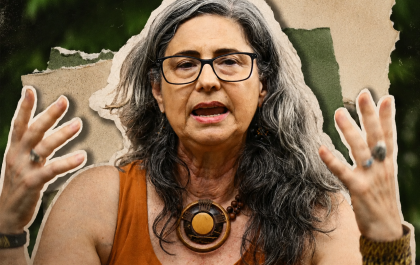
Luciana Gatti entra en política porque el Congreso brasileño está legislando la catástrofe
Luciana Gatti lleva más de 30 años estudiando la Amazonia y los gases que aceleran el calentamiento global. Es investigadora principal del Instituto Nacional de Investigaciones Espaciales de Brasil, el INPE, y coordina su Laboratorio de Gases de Efecto Invernadero. No es una tertuliana reciclada, una celebridad buscando foco ni una profesional de la política fabricada en un despacho. Es una científica que ha dedicado décadas a medir cómo uno de los mayores reguladores climáticos del planeta está dejando de funcionar.
Ahora ha decidido presentarse al Congreso.
Gatti anunció el 13 de julio su precandidatura a diputada federal por São Paulo dentro del Partido Socialismo y Libertad, el PSOL. Las candidaturas deberán registrarse oficialmente antes del 15 de agosto y la primera vuelta de las elecciones brasileñas se celebrará el 4 de octubre. Su objetivo es llevar la ciencia al lugar donde se aprueban las leyes que están acelerando el desastre. Porque publicar investigaciones sirve de poco cuando quienes legislan las ignoran, las niegan o directamente trabajan para las empresas responsables.
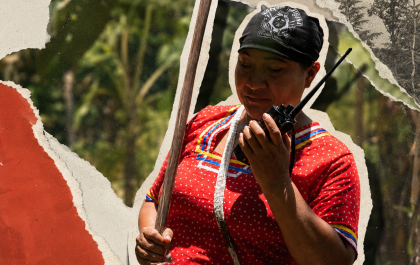
Ecuador abandona la Amazonia al oro ilegal y deja solos a quienes la protegen
La Amazonia ecuatoriana está siendo devorada por la minería ilegal mientras el Estado llega tarde, responde a medias o directamente mira hacia otro lado. Retroexcavadoras, dragas, campamentos clandestinos y grupos armados avanzan sobre territorios indígenas y áreas protegidas. Frente a ellos, 598 guardaparques abandonados a su suerte, sin capacidad legal para incautar maquinaria y sin medios para enfrentarse a organizaciones que llevan fusiles.
En el Parque Nacional Sumaco Napo-Galeras, varios trabajadores fueron interceptados durante una inspección por hombres fuertemente armados que afirmaron proporcionar seguridad a los mineros. Les quitaron los teléfonos, el GPS y la cámara. Quienes debían representar la autoridad ambiental terminaron desarmados, retenidos y obligados a explicar qué hacían dentro del espacio que estaban protegiendo. Los delincuentes pedían cuentas a los guardaparques y no al revés.
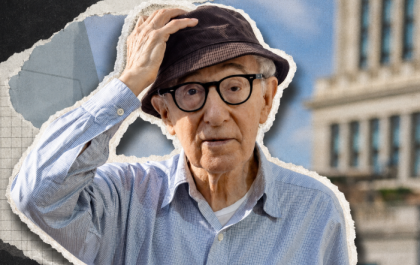
Ayuso convierte la cultura madrileña en un photocall pagado con dinero público
La política cultural de Isabel Díaz Ayuso tiene una regla bastante sencilla: para las creadoras y creadores corrientes existen formularios, convocatorias, límites presupuestarios y meses de espera; para las celebridades dispuestas a promocionar Madrid y posar junto al poder aparecen patrocinios millonarios, espacios públicos y contratos diseñados específicamente para ellas.
No es mecenazgo. Tampoco es una defensa desinteresada de la cultura. Es dinero público utilizado para comprar prestigio, propaganda turística y fotografías institucionales. La obra artística queda reducida a soporte publicitario y las administraciones se comportan como una agencia de representación financiada por las y los contribuyentes.
Nacho Cano fue durante años el mejor ejemplo de este modelo. Ahora Woody Allen recoge el testigo con un proyecto que recibirá 3 millones de euros de la Comunidad y del Ayuntamiento de Madrid. Dos nombres famosos, dos operaciones presentadas como apoyo cultural y una misma lógica: socializar el coste para que el beneficio político y empresarial quede en pocas manos.

15.000 personas ya han visto cómo la fe se convierte en poder
El último ReportajeSR analiza cómo determinados sectores del evangelismo conservador dejaron de limitarse a los templos para convertirse en una maquinaria política al servicio de la extrema derecha. De Trump a Bolsonaro, de Milei a Vox: redes comunitarias, guerras culturales, dinero, medios y religión convertidos en infraestructura electoral.
Presentado por Léa Gugelmann, el reportaje ya ha superado las 15.000 visualizaciones desde su estreno. Porque para entender el auge de la extrema derecha no basta con mirar a sus candidatos: también hay que observar quién construye sus discursos, moviliza sus bases y presenta el autoritarismo como una misión divina.
Vídeo | Sadismo en primera persona
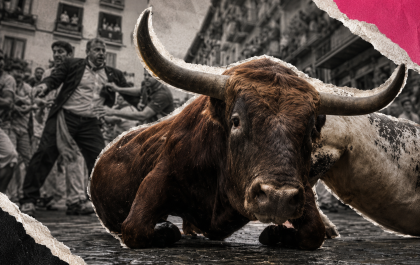
Un turista graba el encierro de San Fermín como si estuviera en una atracción. Adrenalina, golpes, risas y animales convertidos en decorado para conseguir un vídeo viral. No está viviendo una tradición: está consumiendo sufrimiento como entretenimiento.
Además, corre con una cámara cuando está prohibido hacerlo, poniendo en peligro a quienes tiene alrededor. La turistificación añade otra capa de irresponsabilidad a una barbaridad ya normalizada: venir, beber, molestar, jugar con la vida ajena y marcharse con unos cuantos clics. El sadismo también se graba en primera persona.