


Este medio se sostiene gracias a su comunidad. APOYA EL PERIODISMO INDEPENDIENTE .
Watching this one-year old going to sleep might make you want to go to sleep too. Shutterstock
Have you ever wondered why when we see someone yawn, we yawn almost immediately? Or how newborns imitate facial gestures like sticking out their tongue? And what about how we learn to use scissors or to colour?
It all has a lot to do with a particular type of neuron called “mirror neurons”.
What are mirror neurons?
Mirror neurons are amazing neurons that participate in important processes such as learning, empathy and imitation.
They were discovered by chance by the Italian neurobiologist Giacomo Rizzolatti in 1996. Looking at the brain of a macaque, Rizzolatti and his team recorded neurons that were activated not only when the animal carried out an action, but also when it observed another animal doing the same activity. What’s more, in both cases the premotor cortex was activated in an identical way.
It was soon found that exactly the same thing happens in humans. For example, when we watch someone climb stairs, the motor neurons that correspond to those movements are activated without us taking a single step. When we observe another individual performing an action, without even having to speak, our mirror neurons can put us in the same situation, simulating the action mentally as if it were happening to us.
This type of nerve cell even enables us to understand the intention with which an action is carried out.
Another of mirror neurons’ properties is that they are activated by the sound associated with an action. For example, when they hear paper being torn, they mentally emulate that action – even if we do not actually see it taking place.
Where are they?
Mirror neurons are located in four brain regions that communicate with each other: the premotor area, the inferior frontal gyrus, the parietal lobe, and the superior temporal sulcus. Each of these is responsible for a different function:
The premotor area manages movements and controls muscles
The inferior frontal gyrus is involved in executive control processes, the management of social and affective behaviours and decision making
The parietal lobe analyses visual sensory information
The superior temporal sulcus is involved in auditory processing and language.
Learning and empathy
The existence of mirror neurons is essential for our species. That’s mainly because of the role they play in learning by imitation and observation but also because they participate in language acquisition and are essential in the development of empathy and social behaviour – they allow us to understand the actions of other people and their emotions.
Mirror neurons are implicated in numerous clinical conditions. They are affected by autism, schizophrenia, apraxia (an inability to perform motor tasks) and neurodegenerative diseases, among others.
For example, in autism, there are motor, language and social problems that coexist. It is no coincidence that all these functions are related to brain areas where mirror neurons are located.
Harnessing mirror neurons in the classroom
We can consider observational learning to be any moment in which an action is observed and something new is learned or previous knowledge is modified. We must not confuse imitation (for example, copying an individual’s gestures) with observational learning. The latter is a change that lasts in the individual and produces a response.
By observing a process, mirror neurons prepare us to imitate the action being observed. If, while teaching, we combine observational learning with student creativity, we will obtain more efficient learning. The lesson will be internalised and will last over time.
All of this leads us to highlight the important role that educators play in the classroom. The students observe all the actions carried out by their teacher. For this reason, we should look beyond traditional teaching (which is merely expository and static in nature) and carry out more activities that allow for observation skills to be developed.
Another aspect to highlight is the attitude that teachers have in the classroom. Mirror neurons allow us to understand the intentions and emotions being transmitted. Those passionate teachers who teach their subjects with enthusiasm and joy achieve a greater level of concentration and observation from the student, capturing their attention for a longer amounts of time and infecting them with their emotion.
For all these reasons, there are different educational methodologies that allow us to combine this knowledge about mirror neurons with useful tools that fit into the classroom context. In any case, it is essential to incorporate new strategies to encourage motivation, as well as to use manipulative tasks (laboratory sessions, practical cases, etc.) that allow the contents being learned to be used and internalised.
All the events that take place in the classroom, the dynamics of the classes and the emotional aspects that the teacher transmits to the students will condition the learning and experience that the students have in the classroom.
Las personas firmantes no son asalariadas, ni consultoras, ni poseen acciones, ni reciben financiación de ninguna compañía u organización que pueda obtener beneficio de este artículo, y han declarado carecer de vínculos relevantes más allá del cargo académico citado anteriormente.
Este periodismo no lo financian bancos ni partidos
Lo sostienen personas como tú. En un contexto de ruido, propaganda y desinformación, hacer periodismo crítico, independiente y sin miedo tiene un coste.
Si este artículo te ha servido, te ha informado o te ha hecho pensar, puedes ayudarnos a seguir publicando.
Cada aportación cuenta. Sin intermediarios. Sin líneas rojas impuestas. Solo periodismo sostenido por su comunidad.
 Seguir
 Seguir
 Seguir
 Seguir
 Subscribe
 Seguir

Luciana Gatti entra en política porque el Congreso brasileño está legislando la catástrofe
Luciana Gatti lleva más de 30 años estudiando la Amazonia y los gases que aceleran el calentamiento global. Es investigadora principal del Instituto Nacional de Investigaciones Espaciales de Brasil, el INPE, y coordina su Laboratorio de Gases de Efecto Invernadero. No es una tertuliana reciclada, una celebridad buscando foco ni una profesional de la política fabricada en un despacho. Es una científica que ha dedicado décadas a medir cómo uno de los mayores reguladores climáticos del planeta está dejando de funcionar.
Ahora ha decidido presentarse al Congreso.
Gatti anunció el 13 de julio su precandidatura a diputada federal por São Paulo dentro del Partido Socialismo y Libertad, el PSOL. Las candidaturas deberán registrarse oficialmente antes del 15 de agosto y la primera vuelta de las elecciones brasileñas se celebrará el 4 de octubre. Su objetivo es llevar la ciencia al lugar donde se aprueban las leyes que están acelerando el desastre. Porque publicar investigaciones sirve de poco cuando quienes legislan las ignoran, las niegan o directamente trabajan para las empresas responsables.

Ecuador abandona la Amazonia al oro ilegal y deja solos a quienes la protegen
La Amazonia ecuatoriana está siendo devorada por la minería ilegal mientras el Estado llega tarde, responde a medias o directamente mira hacia otro lado. Retroexcavadoras, dragas, campamentos clandestinos y grupos armados avanzan sobre territorios indígenas y áreas protegidas. Frente a ellos, 598 guardaparques abandonados a su suerte, sin capacidad legal para incautar maquinaria y sin medios para enfrentarse a organizaciones que llevan fusiles.
En el Parque Nacional Sumaco Napo-Galeras, varios trabajadores fueron interceptados durante una inspección por hombres fuertemente armados que afirmaron proporcionar seguridad a los mineros. Les quitaron los teléfonos, el GPS y la cámara. Quienes debían representar la autoridad ambiental terminaron desarmados, retenidos y obligados a explicar qué hacían dentro del espacio que estaban protegiendo. Los delincuentes pedían cuentas a los guardaparques y no al revés.
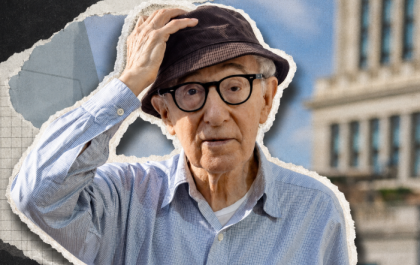
Ayuso convierte la cultura madrileña en un photocall pagado con dinero público
La política cultural de Isabel Díaz Ayuso tiene una regla bastante sencilla: para las creadoras y creadores corrientes existen formularios, convocatorias, límites presupuestarios y meses de espera; para las celebridades dispuestas a promocionar Madrid y posar junto al poder aparecen patrocinios millonarios, espacios públicos y contratos diseñados específicamente para ellas.
No es mecenazgo. Tampoco es una defensa desinteresada de la cultura. Es dinero público utilizado para comprar prestigio, propaganda turística y fotografías institucionales. La obra artística queda reducida a soporte publicitario y las administraciones se comportan como una agencia de representación financiada por las y los contribuyentes.
Nacho Cano fue durante años el mejor ejemplo de este modelo. Ahora Woody Allen recoge el testigo con un proyecto que recibirá 3 millones de euros de la Comunidad y del Ayuntamiento de Madrid. Dos nombres famosos, dos operaciones presentadas como apoyo cultural y una misma lógica: socializar el coste para que el beneficio político y empresarial quede en pocas manos.
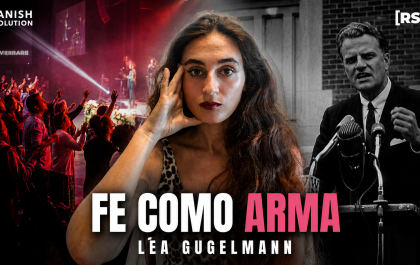
15.000 personas ya han visto cómo la fe se convierte en poder
El último ReportajeSR analiza cómo determinados sectores del evangelismo conservador dejaron de limitarse a los templos para convertirse en una maquinaria política al servicio de la extrema derecha. De Trump a Bolsonaro, de Milei a Vox: redes comunitarias, guerras culturales, dinero, medios y religión convertidos en infraestructura electoral.
Presentado por Léa Gugelmann, el reportaje ya ha superado las 15.000 visualizaciones desde su estreno. Porque para entender el auge de la extrema derecha no basta con mirar a sus candidatos: también hay que observar quién construye sus discursos, moviliza sus bases y presenta el autoritarismo como una misión divina.

Vídeo | Sadismo en primera persona
Un turista graba el encierro de San Fermín como si estuviera en una atracción. Adrenalina, golpes, risas y animales convertidos en decorado para conseguir un vídeo viral. No está viviendo una tradición: está consumiendo sufrimiento como entretenimiento.
Además, corre con una cámara cuando está prohibido hacerlo, poniendo en peligro a quienes tiene alrededor. La turistificación añade otra capa de irresponsabilidad a una barbaridad ya normalizada: venir, beber, molestar, jugar con la vida ajena y marcharse con unos cuantos clics. El sadismo también se graba en primera persona.