


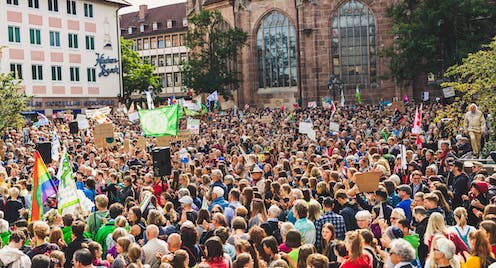

For yet another year, the world’s conference on climate change – COP27 – concluded with few agreements and a clear division between North and South.
The conversations to reach effective consensus on key questions in the fight against global warming and other effects of the climate change will have to wait for a new edition of the COP, scheduled for November 2023 in Dubai.
That might make us consider the factors that contribute to this deadlock, so dangerous, in the progress of the negotiations. Some obvious answers are that those most responsible do not show a clear political will to solve the problem, and that not enough effort or money is dedicated.
But there is another less obvious factor that also contributes to this.
It is hard to reach an agreement
The lack of agreement is a very frequent situation that happens in a diversity of real life scenarios, for instance climate change conferences as the one mentioned above, but also in the political arena where we rarely find major parties coming easily to a consensus on sensitive topics.
Reaching an agreement is a difficult task, especially if it involves large groups of individuals with a diversity of opinions, tendencies and interests. We have now an explanation for this, based on the scientific modelling of opinion dynamics in social systems, which incorporates two key ingredients:
Individuals interact through complex networks of acquaintances.
The scale, composition, and influence of clans to which those individuals belong – family, neighbourhood, political party, country – strongly affect their process of opinion formation and, thus, the emergence of consensus in social systems.
The results of our investigation are surprising and tell us that enhancing the diversity in the groups of influence or partitioning them into smaller units could be good strategies to avoid unsurmountable polarisation and gridlock in the pursuit of global agreement.
Student strike in front of the State Opera, Vienna, 1953.
Austrian National Library / Unsplash
Decisions are influenced by the clan
In our work, developed at the Mapping Complexity Lab of the University of Barcelona and published recently in Chaos, Solitons and Fractals, we were motivated to find the conditions for the emergence of global consensus in social networks (face-to-face and online).
We used a version of the Voter model – in which individuals use imitation as a mechanism of social interaction – to simulate in our computers the evolution of opinion formation in real social networks. The novelty in our model is that the decisions of an individual are influenced by the viewpoint of its own clan.
We represented each social network as a graph – a mathematical structure where individuals and their interactions are represented as nodes connected by links. Each obtained graph was transformed into a similarity map, which displays the complex geography of human relations in the social space such that affine individuals in the same clan are separated by smaller distances.
The interpretation of a clan in our framework goes beyond the normative meaning of extended family and defines a group that has a shared identity based on previous experiences.
When a clan is made of individuals who have been in contact for a long time and gone through similar experiences, sociology suggests that we should expect a higher degree of interaction and affinity within the members.
We considered real data sets where our definition of clan finds a natural interpretation. For example a Facebook friendship network, where nodes consist of Caltech university students and links represent online friendship ties, and a network between politicians in the 48th parliament of New Zealand, where a link between a pair of members of the parliament was established when they participated in discussions about the same topic.
Although large differences in affinity might be expected to contribute to blockages in reaching agreement, we found the opposite. Global agreement was easier to reach when the groups influencing individuals where more diverse, with diversity achieved either by partitioning or mixing the groups.
On the contrary, bigger clans of affine nodes sustained longer polarized opinion states, forming two clearly identifiable domains in the social similarity maps. Thus, global consensus was more difficult.
Hence, our results explain why we do not observe that big structured populations easily come to a full consensus in the real world. They also suggest that group diversity can help promote global agreement by reducing friction between sectors of like-minded individuals that pull in opposite directions.
Balancing consensus and polarization
Indeed, evidence in the social sciences at the microscale supports the idea that diversified teams can be more effective in decision making. There’s an interesting case reported where a public health journal implemented a consensus-driven shared leadership model to build a high-functioning editorial team.
The cocktail formula – shake and divide – could help organize collective agreement in a variety of scenarios where reaching global consensus is of vital importance.
For example, we urgently need a global deal regarding the ethical limits to the operation and use of Artificial Intelligence.
Note that in the political arena the consensus problem presents a clear duality – reality is more complex than we would sometimes like. On one hand, global consensus is necessary to act against some of the big challenges that threaten society. On the other hand, consensus sometimes denotes doctrine, in contrast to a plurality of opinions that are beneficial and needed for a healthy society.
Future research in the framework of our social network science models could help elucidate the delicate balance that allows for the survival of a plurality of opinions beyond polarized regimes, which hinders global consensus.
Para llevar a cabo esta investigación, M. Ángeles Serrano ha recibido fondos de la Agencia Estatal de Investigación de España, código de proyecto PID2019-106290GB- C22/AEI/10.13039/501100011033.



 Seguir
 Seguir
 Seguir
 Seguir
 Subscribe
 Seguir
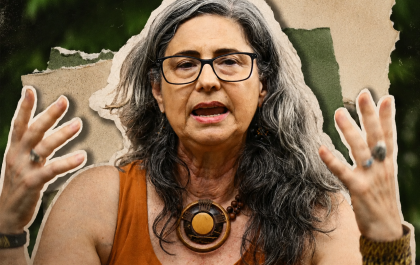
Luciana Gatti entra en política porque el Congreso brasileño está legislando la catástrofe
Luciana Gatti lleva más de 30 años estudiando la Amazonia y los gases que aceleran el calentamiento global. Es investigadora principal del Instituto Nacional de Investigaciones Espaciales de Brasil, el INPE, y coordina su Laboratorio de Gases de Efecto Invernadero. No es una tertuliana reciclada, una celebridad buscando foco ni una profesional de la política fabricada en un despacho. Es una científica que ha dedicado décadas a medir cómo uno de los mayores reguladores climáticos del planeta está dejando de funcionar.
Ahora ha decidido presentarse al Congreso.
Gatti anunció el 13 de julio su precandidatura a diputada federal por São Paulo dentro del Partido Socialismo y Libertad, el PSOL. Las candidaturas deberán registrarse oficialmente antes del 15 de agosto y la primera vuelta de las elecciones brasileñas se celebrará el 4 de octubre. Su objetivo es llevar la ciencia al lugar donde se aprueban las leyes que están acelerando el desastre. Porque publicar investigaciones sirve de poco cuando quienes legislan las ignoran, las niegan o directamente trabajan para las empresas responsables.
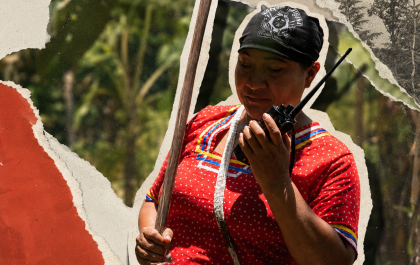
Ecuador abandona la Amazonia al oro ilegal y deja solos a quienes la protegen
La Amazonia ecuatoriana está siendo devorada por la minería ilegal mientras el Estado llega tarde, responde a medias o directamente mira hacia otro lado. Retroexcavadoras, dragas, campamentos clandestinos y grupos armados avanzan sobre territorios indígenas y áreas protegidas. Frente a ellos, 598 guardaparques abandonados a su suerte, sin capacidad legal para incautar maquinaria y sin medios para enfrentarse a organizaciones que llevan fusiles.
En el Parque Nacional Sumaco Napo-Galeras, varios trabajadores fueron interceptados durante una inspección por hombres fuertemente armados que afirmaron proporcionar seguridad a los mineros. Les quitaron los teléfonos, el GPS y la cámara. Quienes debían representar la autoridad ambiental terminaron desarmados, retenidos y obligados a explicar qué hacían dentro del espacio que estaban protegiendo. Los delincuentes pedían cuentas a los guardaparques y no al revés.

Ayuso convierte la cultura madrileña en un photocall pagado con dinero público
La política cultural de Isabel Díaz Ayuso tiene una regla bastante sencilla: para las creadoras y creadores corrientes existen formularios, convocatorias, límites presupuestarios y meses de espera; para las celebridades dispuestas a promocionar Madrid y posar junto al poder aparecen patrocinios millonarios, espacios públicos y contratos diseñados específicamente para ellas.
No es mecenazgo. Tampoco es una defensa desinteresada de la cultura. Es dinero público utilizado para comprar prestigio, propaganda turística y fotografías institucionales. La obra artística queda reducida a soporte publicitario y las administraciones se comportan como una agencia de representación financiada por las y los contribuyentes.
Nacho Cano fue durante años el mejor ejemplo de este modelo. Ahora Woody Allen recoge el testigo con un proyecto que recibirá 3 millones de euros de la Comunidad y del Ayuntamiento de Madrid. Dos nombres famosos, dos operaciones presentadas como apoyo cultural y una misma lógica: socializar el coste para que el beneficio político y empresarial quede en pocas manos.

THUNDERFORGE – El PENTÁGONO se echa en manos de la INTELIGENCIA ARTÍFICIAL #ReportajeS
El Pentágono ha dado un paso sin precedentes: poner la toma de decisiones y la estrategia militar en manos de la inteligencia artificial. Patricia Salvador te cuenta en este #ReportajeSR cómo, a…
STARSHIELD: la GUERRA PRIVADA (con dinero público) de MUSK #ReportajeSR
¿Es Elon Musk más poderoso que un Estado? Analizamos cómo SpaceX ha dejado de ser una empresa de cohetes para convertirse en el «sistema nervioso» de la guerra moderna. Desde el uso…
MODO REVOLUCIÓN
Activa el Modo Revolución con nosotras. Historias, investigaciones, vídeos y claves para entender qué está pasando y qué hay detrás.
También te puede interesar
Un toro de 300 metros: obscenidad franquista en versión parque temático
28 julio 2025PSOE: manual de cierre de filas en cinco pasos (y por qué siempre falla)
13 junio 2025Mazón no quiere dimitir: utiliza una remodelación para eludir responsabilidades
14 noviembre 2024La caída de un imperio: Elon Musk y todos sus frentes abiertos anuncian el final de un magnate
19 agosto 2024