



Este medio se sostiene gracias a su comunidad. APOYA EL PERIODISMO INDEPENDIENTE .
Could ChatGPT be the technological tool that will, finally, radically change higher education? Shutterstock
Less than a week after Open AI released ChatGPT, CEO Sam Altman announced that the chatbot had already surpassed one million users. By January 13, 2023, the global Google search for the word “ChatGPT” had hit a popularity score of 92 and Microsoft has since invested $10 billion in OpenAI.
Now, the chatbot is at capacity and no longer available for use thanks to server saturation, but OpenAI has recently announced a $20 per month subscription service that it will be piloting with people off its waitlist.
As most of us are now aware, ChatGPT is a text-based artificial intelligence tool capable of natural language generation and human-like responses with a certain level of accuracy.
This new tool – and, importantly, conversations about the new tool – is taking the world by storm. Opinions abound.
Some people are ready to totally embrace it, citing its high efficiency in creating texts such as emails or press releases in terms of time, money, and resources. Using ChatGPT to generate a letter of acceptance (or rejection), for instance, can reduce the time it usually takes to do this job from 30 minutes down to five. That’s quite spectacular, particularly for those of us who find such tasks time-consuming and tedious. Yet, others see the beginning of the end of human uniqueness and originality in the way that the tool uses massive amounts of commonly existing data.
Misinformation is another shortcoming of ChatGPT because it pulls from trusted and non-trusted sources of data equally. On top of that, ChatGPT is unable to cite the references it uses in executing the requested tasks and sometimes (many times) it even makes up an entire response, albeit eloquently.
Enthusiasts and alarmists
This new technology has a direct impact on higher education – and it certainly has classrooms talking. Opinions around the use of this tool in academia are clearly divided between enthusiasts (particularly students) and alarmists (namely professors).
Professors fear (rightfully so) that the use of this tool will open doors to cheating and plagiarism, while students see it as the long-awaited technology that will help them with writing late assignments, executing complex coding exercises, and perhaps even acing exams. The whole academic body feels uncomfortable, and so do some students, it turns out.
All this activity and debate around the entrance (or not) of ChatGPT into academia shows that it is providing a shakeup that the industry has long needed, and perhaps even long craved. New technology, old problem, same debate.
Historically speaking, technology has always affected education in significant ways and always with a mix of supporters and opponents. In his book, Teaching in a Digital Age, A.W. Bates writes that “arguments about the role of technology in education go back at least 2,500 years.” Written communication is one of the greatest tools that made knowledge more accessible and allowed the worldwide expansion of education. In Europe specifically, this coincided with the invention of the printing press in the 15th century.
Ironically, Socrates, the great Greek philosopher, was not a strong supporter of written documents and did not believe writing to be an effective means of communicating knowledge. In the mid-1990s, Internet-based learning was made possible due to the development of web-based learning management systems, another technological breakthrough that made MOOCs possible, challenging the traditional educational model and causing debates that are still in existence today.
Could ChatGPT be the technological tool that will, finally, radically change higher education?
Challenges in higher education
Alongside student wellbeing and campus sustainability, digital transformation is one of the biggest challenges facing higher education – and with ChatGPT, the challenges are even bigger.
No doubt, there will be many who resist ChatGPT and much research and investigation spent on methods of not only detecting its use but preventing its entry into higher education. As if prevention in its entirety were possible.
Whether we embrace or resist ChatGPT, there is no denying that this new tool has exposed, once again, the fragility and vulnerability of our higher education systems. Mack Institute Co-Director Christian Terwiesch tested the ability of ChatGPT in a Wharton MBA program Operations Management course and found that the tech tool would have received a B to B- grade on the exam. A rather unsettling result. According to Terwiesch, this outcome has numerous implications for business school education, including the need to improve teaching creativity and productivity, and to change current exam policies and curricula.
Change of mindset
Isn’t it about time, anyway, that we revisit our curricula, evaluation criteria, and learning and teaching tools? Making room for this new technology might very well be the excuse we need, as Christian Terwiesch indicates. If our evaluation systems were reconsidered so that they are not based on endless assignments, multiple tests, and countless deliverables, then this would certainly make room within the curriculum and create time in the classroom (and out of it) for something new.
But the question becomes: room and time for what? This next step must be considered carefully, because what we have here is a golden opportunity if used wisely. Thus, we must not only ask what will happen to our coding and programming classes if we rethink our evaluation systems thanks to the entry of ChatGPT (in whatever form that takes), but also: what do we want to happen? And what about courses focused on writing skills and communication? Should they be removed entirely from our educational programs? Just to think about such a change makes one uneasy.
This is the type of conversation that has started thanks to ChatGPT. We are finally asking the big questions about higher education.
As Mollick points out, ChatGPT may very well be the harbinger of a new era, one of human-machine integration. If that’s the case, education is the logical – and unavoidable – starting point.
So, what if, instead of prohibiting the use of ChatGPT in essays, assignments, and exams, students were allowed – no, required – to use the digital tool, and then spend their time critically analysing its output, outlining the thought-process and pinpointing its strength and weaknesses? What if the true assignment is no longer in providing an answer to a question or a solution to a problem but in analysing how that answer is generated?
This change in mindset around assignments could help students develop their critical and analytical thinking.
We can either view ChatGPT as the ultimate blow to our educational systems or as the spark that will change education for the better. I think both humans and technology would provide the same answer to this question.
A version of this article was originally published by IE Insights, the thought leadership publication of IE University.
Rafif Srour Daher does not work for, consult, own shares in or receive funding from any company or organisation that would benefit from this article, and has disclosed no relevant affiliations beyond their academic appointment.
Este periodismo no lo financian bancos ni partidos
Lo sostienen personas como tú. En un contexto de ruido, propaganda y desinformación, hacer periodismo crítico, independiente y sin miedo tiene un coste.
Si este artículo te ha servido, te ha informado o te ha hecho pensar, puedes ayudarnos a seguir publicando.
Cada aportación cuenta. Sin intermediarios. Sin líneas rojas impuestas. Solo periodismo sostenido por su comunidad.
 Seguir
 Seguir
 Seguir
 Seguir
 Subscribe
 Seguir
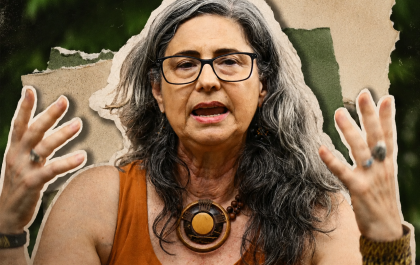
Luciana Gatti entra en política porque el Congreso brasileño está legislando la catástrofe
Luciana Gatti lleva más de 30 años estudiando la Amazonia y los gases que aceleran el calentamiento global. Es investigadora principal del Instituto Nacional de Investigaciones Espaciales de Brasil, el INPE, y coordina su Laboratorio de Gases de Efecto Invernadero. No es una tertuliana reciclada, una celebridad buscando foco ni una profesional de la política fabricada en un despacho. Es una científica que ha dedicado décadas a medir cómo uno de los mayores reguladores climáticos del planeta está dejando de funcionar.
Ahora ha decidido presentarse al Congreso.
Gatti anunció el 13 de julio su precandidatura a diputada federal por São Paulo dentro del Partido Socialismo y Libertad, el PSOL. Las candidaturas deberán registrarse oficialmente antes del 15 de agosto y la primera vuelta de las elecciones brasileñas se celebrará el 4 de octubre. Su objetivo es llevar la ciencia al lugar donde se aprueban las leyes que están acelerando el desastre. Porque publicar investigaciones sirve de poco cuando quienes legislan las ignoran, las niegan o directamente trabajan para las empresas responsables.
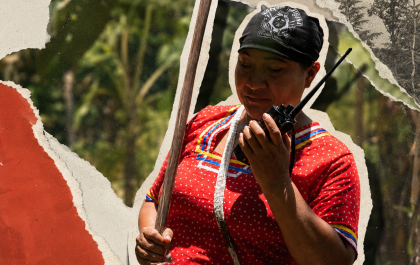
Ecuador abandona la Amazonia al oro ilegal y deja solos a quienes la protegen
La Amazonia ecuatoriana está siendo devorada por la minería ilegal mientras el Estado llega tarde, responde a medias o directamente mira hacia otro lado. Retroexcavadoras, dragas, campamentos clandestinos y grupos armados avanzan sobre territorios indígenas y áreas protegidas. Frente a ellos, 598 guardaparques abandonados a su suerte, sin capacidad legal para incautar maquinaria y sin medios para enfrentarse a organizaciones que llevan fusiles.
En el Parque Nacional Sumaco Napo-Galeras, varios trabajadores fueron interceptados durante una inspección por hombres fuertemente armados que afirmaron proporcionar seguridad a los mineros. Les quitaron los teléfonos, el GPS y la cámara. Quienes debían representar la autoridad ambiental terminaron desarmados, retenidos y obligados a explicar qué hacían dentro del espacio que estaban protegiendo. Los delincuentes pedían cuentas a los guardaparques y no al revés.

Ayuso convierte la cultura madrileña en un photocall pagado con dinero público
La política cultural de Isabel Díaz Ayuso tiene una regla bastante sencilla: para las creadoras y creadores corrientes existen formularios, convocatorias, límites presupuestarios y meses de espera; para las celebridades dispuestas a promocionar Madrid y posar junto al poder aparecen patrocinios millonarios, espacios públicos y contratos diseñados específicamente para ellas.
No es mecenazgo. Tampoco es una defensa desinteresada de la cultura. Es dinero público utilizado para comprar prestigio, propaganda turística y fotografías institucionales. La obra artística queda reducida a soporte publicitario y las administraciones se comportan como una agencia de representación financiada por las y los contribuyentes.
Nacho Cano fue durante años el mejor ejemplo de este modelo. Ahora Woody Allen recoge el testigo con un proyecto que recibirá 3 millones de euros de la Comunidad y del Ayuntamiento de Madrid. Dos nombres famosos, dos operaciones presentadas como apoyo cultural y una misma lógica: socializar el coste para que el beneficio político y empresarial quede en pocas manos.

15.000 personas ya han visto cómo la fe se convierte en poder
El último ReportajeSR analiza cómo determinados sectores del evangelismo conservador dejaron de limitarse a los templos para convertirse en una maquinaria política al servicio de la extrema derecha. De Trump a Bolsonaro, de Milei a Vox: redes comunitarias, guerras culturales, dinero, medios y religión convertidos en infraestructura electoral.
Presentado por Léa Gugelmann, el reportaje ya ha superado las 15.000 visualizaciones desde su estreno. Porque para entender el auge de la extrema derecha no basta con mirar a sus candidatos: también hay que observar quién construye sus discursos, moviliza sus bases y presenta el autoritarismo como una misión divina.

Vídeo | Sadismo en primera persona
Un turista graba el encierro de San Fermín como si estuviera en una atracción. Adrenalina, golpes, risas y animales convertidos en decorado para conseguir un vídeo viral. No está viviendo una tradición: está consumiendo sufrimiento como entretenimiento.
Además, corre con una cámara cuando está prohibido hacerlo, poniendo en peligro a quienes tiene alrededor. La turistificación añade otra capa de irresponsabilidad a una barbaridad ya normalizada: venir, beber, molestar, jugar con la vida ajena y marcharse con unos cuantos clics. El sadismo también se graba en primera persona.