


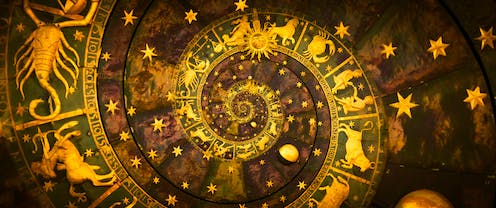

What is your sign? If you can answer that question, you are one of the 90% of adults who know your zodiac sign. This is no surprise: the media, social networks and digital applications have all recently given a new push to astrology.
In contrast, in a survey conducted in the United States, only 57% of respondents knew their blood type. What makes astrology so special?
Astrology: the study of the stars to read the future
Astrology is defined as the study of the position and movement of the stars as a means of predicting future events and finding out about people’s character. It originated in Babylon around the year 700-450 BC, when the 12 zodiac signs were established – with their interpretation focused on predicting events in the population.
It was in ancient Greece where predictions were transferred to individuals and were made based on the relative position of the stars at the time of birth. For example, the fact that a person is a Gemini means that, at the time of their birth, the Sun (projected in the sky) was in the position that aligned with the Gemini constellation.
The constellations of the zodiac are those in which the Sun is projected, in a straight line, along the Earth’s annual path.
Author provided
The Earth, when revolving around the Sun, makes its way through the different constellations. That path is known as the ecliptic plane. The sun sign, according to astrologers, represents our personality, self-perception, love compatibility, and basic preferences. Thus, studying the position of the celestial bodies can help us choose better friends, suitable love relationships, and make better decisions both professionally and financially.
As the Earth travels around the Sun (blue ellipse), the Sun appears to move through the constellations of the zodiac (black line).
Tartila/Shutterstock, Author provided
Three reasons to change your horoscope
There are at least three reasons why your zodiac sign is most likely not what you think.
The Babylonians observed that there were 13 different constellations on the ecliptic plane; however, since they had a 12-month calendar dictated by the phases of the Moon, they decided to keep that value and used 12 constellations to name the zodiacal signs. The Babylonians deliberately left one out: Ophiuchus.
All the constellations have different lengths; thus, they are in front of the Sun for variable amounts of time. For example, Leo spans 37 days while Scorpio spans only 7. This leaves many who claim to be Scorpio out of it, among other irregularities.
Due to the gravitational influence of the Sun and the Moon, the Earth wobbles slightly. Thus, the north pole deviates little by little, producing the precession effect. The result is an apparent change in the position of the constellations. Since the zodiac signs were established around 3,000 years ago, they have now moved about a month.
For someone who was born on June 1 three thousand years ago, the Sun would have been in the Gemini constellation. Currently, due to precession, on June 1 the Sun is not in Gemini but instead in the constellation Taurus.
The most famous experiment in astrology: the Naninga Astrotest
In 1996, an experiment was published in which 44 astrologers tried to match the birth data (date, time, and place) of seven anonymous people with their respective personality questionnaires.
The questionnaires were taken from the Berkeley University Personality Profile, and there were other questions also included suggested by the 44 astrologers. Aspects related to education, family, vocation, hobbies, personality, relationships, health, etc. were covered.
The astrologer who managed to correctly match the seven anonymous people’s birth data with their respective questionnaires would win $2,500. The results were disappointing for astrology: the most skilled astrologer had 3 correct matches out of 7, and half of the participants (22) did not have a single correct answer.
There are several articles that put astrology and its predictive power to the test. Spoiler alert: astrology fails every time. An astrologer has the same chances of being right about aspects of our future as anyone else who bases their responses on chance.
There are people who decide on their partner based on the zodiac signs. Nevertheless, it seems that love is not dictated by the stars. A study carried out with 10 million marriages in England and Wales showed that there is no evidence of attraction (or rejection) between the different zodiac signs.
Why astrology convinces so many
Although it is well proven that astrology does not get things right, 27% of Americans and 23% of the French believe in it, while 46% of Mexicans feel that their horoscope is something important in their lives.
Why is that? Astrology is an extremely profitable business. In the United States alone, astrology apps brought in $40 million for their creators in 2019. This makes astrology be promoted even more online, and more and more people are getting into the market.
But the most interesting thing in all this is that humans are prone to errors and biases related with judgement and reasoning. This means that horoscopes fit into our mental mechanisms. Specifically, they rely on what we know as confirmation bias and the Barnum effect.
Confirmation bias shows that prior beliefs and expectations can influence the selection, retention and evaluation of evidence; that is, we look for information that supports our ideas and ignore information that contradicts them.
For example, if our horoscope mentions that “it will be a day of strong contrasts” and we have a very calm day, we will simply ignore that prediction. However, if we really do have a day of contrasts, the first thing we will think is, “Of course, the horoscope warned me.”
The Barnum effect is a psychological phenomenon that consists of perceiving general and ambiguous descriptions (applicable to everyone) as if they were highly precise statements (made specifically for us).
The horoscope of a serial killer
In 1968, French psychologist Michel Gauquelin published a newspaper ad. In exchange for one’s name, address, date of birth and place of birth, he offered a 10-page personalised horoscope free of charge. A real bargain!
After receiving the horoscope, 94% of those who had sent in their information said they were satisfied with the results, with 90% even stating that their relatives had found the descriptions of their profile to be correct. Where is the catch? They had all received the same text! The horoscope sent out by Michel Gauquelin was that of a serial killer born in France on January 17, 1897.
Horoscopes promise certainty (“our fate is in the stars”). Therefore, it is not surprising that people usually turn to horoscopes in times of great uncertainty. At the height of the COVID-19 pandemic, searches related to horoscopes had their highest peak in years.
The aim of this article is not for people to stop reading horoscopes, because they can be an excellent source of entertainment and fun. Nonetheless, we must emphasise that there is no connection between the position of the stars and our lives.
And although horoscopes seem harmless fun, we must remember that French President Charles de Gaulle, Queen Elizabeth I of England and Indian Prime Minister Indira Gandhi all had astrologers to help them make decisions during their tenures.
Just remember that Cassius said to Brutus (in Julius Caesar, by William Shakespeare):
The fault, dear Brutus, is not in our stars.
Las personas firmantes no son asalariadas, ni consultoras, ni poseen acciones, ni reciben financiación de ninguna compañía u organización que pueda obtener beneficio de este artículo, y han declarado carecer de vínculos relevantes más allá del cargo académico citado anteriormente.



 Seguir
 Seguir
 Seguir
 Seguir
 Subscribe
 Seguir
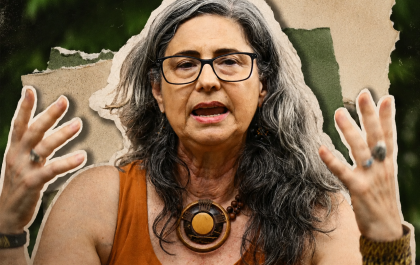
Luciana Gatti entra en política porque el Congreso brasileño está legislando la catástrofe
Luciana Gatti lleva más de 30 años estudiando la Amazonia y los gases que aceleran el calentamiento global. Es investigadora principal del Instituto Nacional de Investigaciones Espaciales de Brasil, el INPE, y coordina su Laboratorio de Gases de Efecto Invernadero. No es una tertuliana reciclada, una celebridad buscando foco ni una profesional de la política fabricada en un despacho. Es una científica que ha dedicado décadas a medir cómo uno de los mayores reguladores climáticos del planeta está dejando de funcionar.
Ahora ha decidido presentarse al Congreso.
Gatti anunció el 13 de julio su precandidatura a diputada federal por São Paulo dentro del Partido Socialismo y Libertad, el PSOL. Las candidaturas deberán registrarse oficialmente antes del 15 de agosto y la primera vuelta de las elecciones brasileñas se celebrará el 4 de octubre. Su objetivo es llevar la ciencia al lugar donde se aprueban las leyes que están acelerando el desastre. Porque publicar investigaciones sirve de poco cuando quienes legislan las ignoran, las niegan o directamente trabajan para las empresas responsables.

Ecuador abandona la Amazonia al oro ilegal y deja solos a quienes la protegen
La Amazonia ecuatoriana está siendo devorada por la minería ilegal mientras el Estado llega tarde, responde a medias o directamente mira hacia otro lado. Retroexcavadoras, dragas, campamentos clandestinos y grupos armados avanzan sobre territorios indígenas y áreas protegidas. Frente a ellos, 598 guardaparques abandonados a su suerte, sin capacidad legal para incautar maquinaria y sin medios para enfrentarse a organizaciones que llevan fusiles.
En el Parque Nacional Sumaco Napo-Galeras, varios trabajadores fueron interceptados durante una inspección por hombres fuertemente armados que afirmaron proporcionar seguridad a los mineros. Les quitaron los teléfonos, el GPS y la cámara. Quienes debían representar la autoridad ambiental terminaron desarmados, retenidos y obligados a explicar qué hacían dentro del espacio que estaban protegiendo. Los delincuentes pedían cuentas a los guardaparques y no al revés.
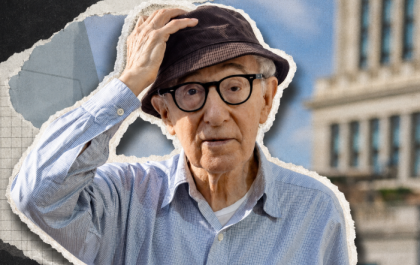
Ayuso convierte la cultura madrileña en un photocall pagado con dinero público
La política cultural de Isabel Díaz Ayuso tiene una regla bastante sencilla: para las creadoras y creadores corrientes existen formularios, convocatorias, límites presupuestarios y meses de espera; para las celebridades dispuestas a promocionar Madrid y posar junto al poder aparecen patrocinios millonarios, espacios públicos y contratos diseñados específicamente para ellas.
No es mecenazgo. Tampoco es una defensa desinteresada de la cultura. Es dinero público utilizado para comprar prestigio, propaganda turística y fotografías institucionales. La obra artística queda reducida a soporte publicitario y las administraciones se comportan como una agencia de representación financiada por las y los contribuyentes.
Nacho Cano fue durante años el mejor ejemplo de este modelo. Ahora Woody Allen recoge el testigo con un proyecto que recibirá 3 millones de euros de la Comunidad y del Ayuntamiento de Madrid. Dos nombres famosos, dos operaciones presentadas como apoyo cultural y una misma lógica: socializar el coste para que el beneficio político y empresarial quede en pocas manos.

THUNDERFORGE – El PENTÁGONO se echa en manos de la INTELIGENCIA ARTÍFICIAL #ReportajeS
El Pentágono ha dado un paso sin precedentes: poner la toma de decisiones y la estrategia militar en manos de la inteligencia artificial. Patricia Salvador te cuenta en este #ReportajeSR cómo, a…
STARSHIELD: la GUERRA PRIVADA (con dinero público) de MUSK #ReportajeSR
¿Es Elon Musk más poderoso que un Estado? Analizamos cómo SpaceX ha dejado de ser una empresa de cohetes para convertirse en el «sistema nervioso» de la guerra moderna. Desde el uso…
MODO REVOLUCIÓN
Activa el Modo Revolución con nosotras. Historias, investigaciones, vídeos y claves para entender qué está pasando y qué hay detrás.
También te puede interesar
Un toro de 300 metros: obscenidad franquista en versión parque temático
28 julio 2025PSOE: manual de cierre de filas en cinco pasos (y por qué siempre falla)
13 junio 2025Mazón no quiere dimitir: utiliza una remodelación para eludir responsabilidades
14 noviembre 2024La caída de un imperio: Elon Musk y todos sus frentes abiertos anuncian el final de un magnate
19 agosto 2024