



Este medio se sostiene gracias a su comunidad. APOYA EL PERIODISMO INDEPENDIENTE .
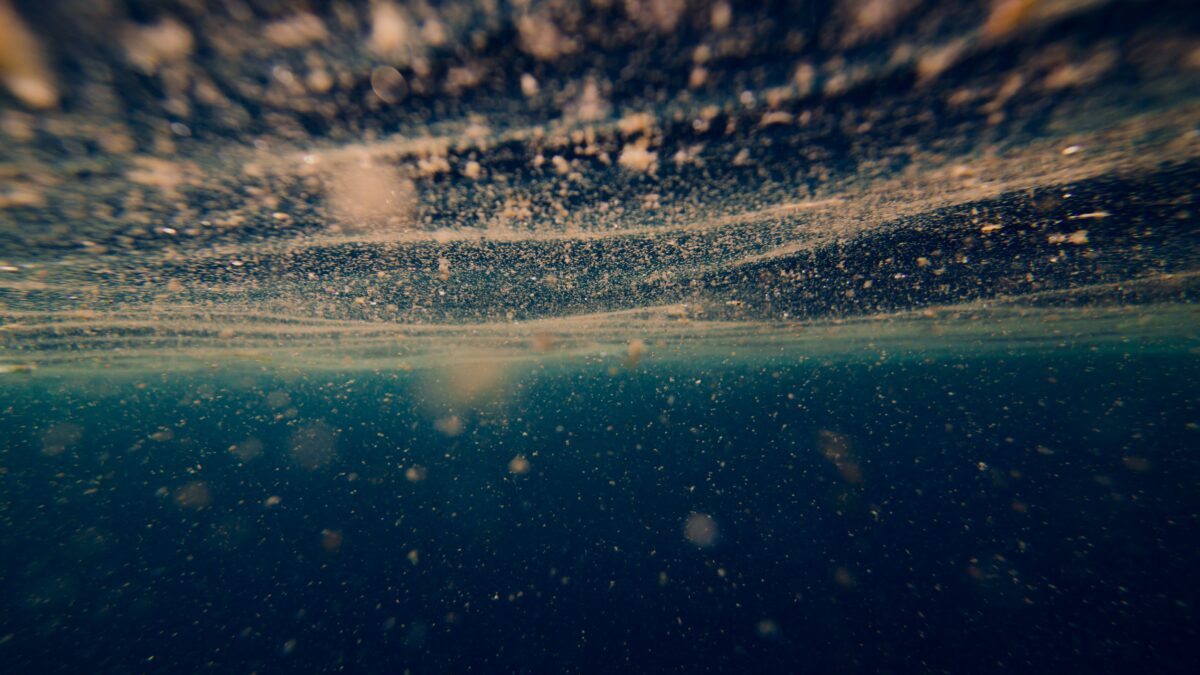
The sea is full of microorganisms. Smaller than one millimetre and often composed of a single cell, they come in every shape and size imaginable, from bacteria and microalgae to protozoa. But there are also viruses – incomplete entities that need a host to replicate, and so survive.
Independent virus particles have an incredibly simple structure. They’re composed of genetic material, in the form of either DNA or RNA, and surrounded by a protein shell. Each measures between 20 and 200 nanometres.
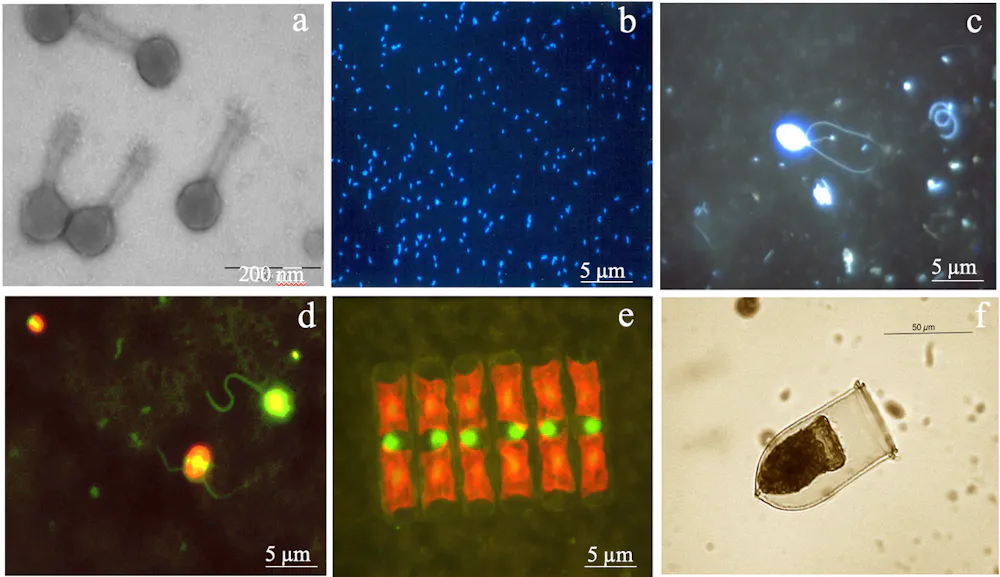
Though they may seem insignificant, viruses are the most bountiful entities in the ocean. Just one millilitre of coastal water taken from the ocean’s surface can contain up to 10 million viruses. The number of viruses decreases further offshore and deeper into the water, and as we reach the open sea, there are likely to be around 100,000 viruses per millilitre at a depth of 4,000 metres.
More viruses than stars
It’s estimated that the oceans contain one nonillion viruses – that’s a number equal to one followed by 30 zeroes, which is many more than the stars in our galaxy, the Milky Way. So how can so many survive?
This story is part of Oceans 21
Our series on the global ocean opened with five in-depth profiles. Look out for new articles on the state of our oceans in the lead up to the UN’s next climate conference, COP26. The series is brought to you by The Conversation’s international network.
While this number remains more or less constant over time, countless viruses are eaten by microorganisms or deactivated by radiation, while countless more burst forth from infected hosts. A dynamic balance exists between the disappearance of viruses and the appearance of new ones in seawater.
Most marine viruses have double-stranded DNA and belong to one of three families: Myoviridae, which feature long tails that can contract; Syphoviridae, which have a curved, non-contractile tail; and Podoviridae, with very short, non-contractile tails.
Viruses and their victims
Marine viruses are generally considered to be microbe killers. Once a virus has encountered a host cell, it identifies it by the cell’s surface receptors and inserts its genetic material and hijacks the machinery inside the cell in order to replicate. Following lysis (rupture of the cell membrane), some 20 to 300 viruses per cell may be shed, each of them ready to infect a new host.
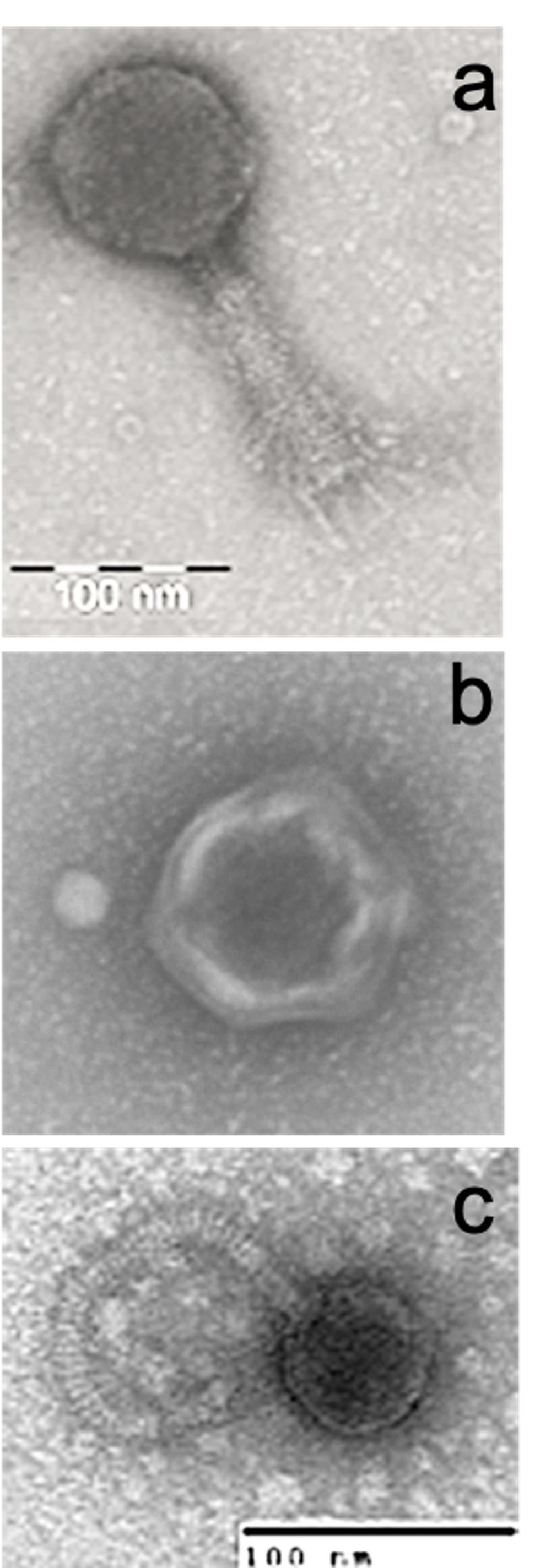
Marine viruses can infect any organism, from bacteria to whales. But the abundance of ocean bacteria – 1 million per millilitre of seawater, making them the most dominant microorganism in the ocean – means that bacteria are their most likely hosts.
It’s estimated that 10²³ (the number ten, followed by 23 zeroes) viral infections occur in the sea every second, releasing new viruses but also 10⁹ tonnes of carbon from the cells they burst. In the entire ocean, viruses release around 140 gigatonnes of carbon a year as a result of this process.
On occasions, the virus does not disrupt the host it infects, but rather inserts part of its genome into the host’s DNA. These viruses are known as prophages, or lysogenic viruses, which can control what genes the host expresses and even its metabolism. But when a lysogenic virus detects an adverse shift in the environment, or if the host is defective, the prophage becomes virulent and destroys the host cell.
Each new infection offers the potential to introduce new genes into the host, and each new progeny of viruses that is shed may have stolen genes from the host. In this way, viruses are the greatest reservoir of diversity in the ocean.
The role of viruses in the ocean
Marine viruses form part of the microbial food web and help control the abundance and diversity of bacteria and algae.
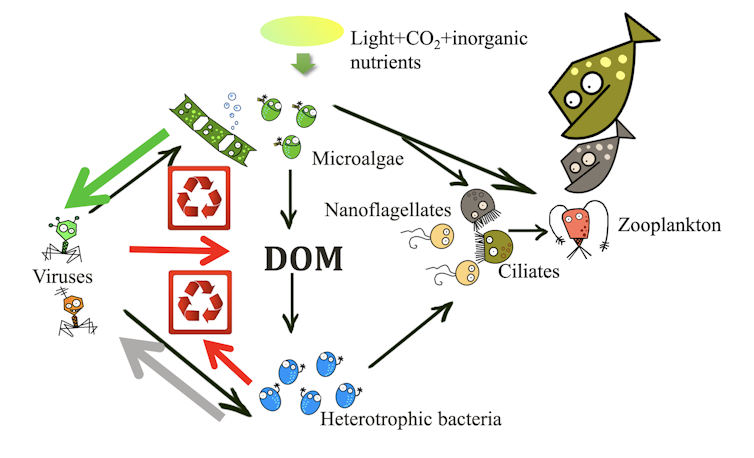
It’s estimated that viruses kill about 20% of all ocean microbes each day. Besides producing new viruses, rupturing these bacterial and algal host cells releases the material contained within, which remains in the water column as dissolved organic and inorganic nutrients.
This dissolved matter will be used again by other microorganisms to grow, which will be eaten by larger creatures, such as zooplankton and fish, which will, in turn, be eaten by sharks, whales and humans. In this way, microscopic viruses recycle the materials necessary for life to flourish. And since the ocean covers over 70% of Earth’s surface, they strongly influence life on much of this planet.

Dolors Vaqué does not work for, consult, own shares in or receive funding from any company or organisation that would benefit from this article, and has disclosed no relevant affiliations beyond their academic appointment.
The Conversation. Rigor académico, oficio periodístico

Este periodismo no lo financian bancos ni partidos
Lo sostienen personas como tú. En un contexto de ruido, propaganda y desinformación, hacer periodismo crítico, independiente y sin miedo tiene un coste.
Si este artículo te ha servido, te ha informado o te ha hecho pensar, puedes ayudarnos a seguir publicando.
Cada aportación cuenta. Sin intermediarios. Sin líneas rojas impuestas. Solo periodismo sostenido por su comunidad.
 Seguir
 Seguir
 Seguir
 Seguir
 Subscribe
 Seguir

Luciana Gatti entra en política porque el Congreso brasileño está legislando la catástrofe
Luciana Gatti lleva más de 30 años estudiando la Amazonia y los gases que aceleran el calentamiento global. Es investigadora principal del Instituto Nacional de Investigaciones Espaciales de Brasil, el INPE, y coordina su Laboratorio de Gases de Efecto Invernadero. No es una tertuliana reciclada, una celebridad buscando foco ni una profesional de la política fabricada en un despacho. Es una científica que ha dedicado décadas a medir cómo uno de los mayores reguladores climáticos del planeta está dejando de funcionar.
Ahora ha decidido presentarse al Congreso.
Gatti anunció el 13 de julio su precandidatura a diputada federal por São Paulo dentro del Partido Socialismo y Libertad, el PSOL. Las candidaturas deberán registrarse oficialmente antes del 15 de agosto y la primera vuelta de las elecciones brasileñas se celebrará el 4 de octubre. Su objetivo es llevar la ciencia al lugar donde se aprueban las leyes que están acelerando el desastre. Porque publicar investigaciones sirve de poco cuando quienes legislan las ignoran, las niegan o directamente trabajan para las empresas responsables.
Ecuador abandona la Amazonia al oro ilegal y deja solos a quienes la protegen
La Amazonia ecuatoriana está siendo devorada por la minería ilegal mientras el Estado llega tarde, responde a medias o directamente mira hacia otro lado. Retroexcavadoras, dragas, campamentos clandestinos y grupos armados avanzan sobre territorios indígenas y áreas protegidas. Frente a ellos, 598 guardaparques abandonados a su suerte, sin capacidad legal para incautar maquinaria y sin medios para enfrentarse a organizaciones que llevan fusiles.
En el Parque Nacional Sumaco Napo-Galeras, varios trabajadores fueron interceptados durante una inspección por hombres fuertemente armados que afirmaron proporcionar seguridad a los mineros. Les quitaron los teléfonos, el GPS y la cámara. Quienes debían representar la autoridad ambiental terminaron desarmados, retenidos y obligados a explicar qué hacían dentro del espacio que estaban protegiendo. Los delincuentes pedían cuentas a los guardaparques y no al revés.

Ayuso convierte la cultura madrileña en un photocall pagado con dinero público
La política cultural de Isabel Díaz Ayuso tiene una regla bastante sencilla: para las creadoras y creadores corrientes existen formularios, convocatorias, límites presupuestarios y meses de espera; para las celebridades dispuestas a promocionar Madrid y posar junto al poder aparecen patrocinios millonarios, espacios públicos y contratos diseñados específicamente para ellas.
No es mecenazgo. Tampoco es una defensa desinteresada de la cultura. Es dinero público utilizado para comprar prestigio, propaganda turística y fotografías institucionales. La obra artística queda reducida a soporte publicitario y las administraciones se comportan como una agencia de representación financiada por las y los contribuyentes.
Nacho Cano fue durante años el mejor ejemplo de este modelo. Ahora Woody Allen recoge el testigo con un proyecto que recibirá 3 millones de euros de la Comunidad y del Ayuntamiento de Madrid. Dos nombres famosos, dos operaciones presentadas como apoyo cultural y una misma lógica: socializar el coste para que el beneficio político y empresarial quede en pocas manos.

15.000 personas ya han visto cómo la fe se convierte en poder
El último ReportajeSR analiza cómo determinados sectores del evangelismo conservador dejaron de limitarse a los templos para convertirse en una maquinaria política al servicio de la extrema derecha. De Trump a Bolsonaro, de Milei a Vox: redes comunitarias, guerras culturales, dinero, medios y religión convertidos en infraestructura electoral.
Presentado por Léa Gugelmann, el reportaje ya ha superado las 15.000 visualizaciones desde su estreno. Porque para entender el auge de la extrema derecha no basta con mirar a sus candidatos: también hay que observar quién construye sus discursos, moviliza sus bases y presenta el autoritarismo como una misión divina.

Vídeo | Sadismo en primera persona
Un turista graba el encierro de San Fermín como si estuviera en una atracción. Adrenalina, golpes, risas y animales convertidos en decorado para conseguir un vídeo viral. No está viviendo una tradición: está consumiendo sufrimiento como entretenimiento.
Además, corre con una cámara cuando está prohibido hacerlo, poniendo en peligro a quienes tiene alrededor. La turistificación añade otra capa de irresponsabilidad a una barbaridad ya normalizada: venir, beber, molestar, jugar con la vida ajena y marcharse con unos cuantos clics. El sadismo también se graba en primera persona.